Why 20-Second Plays Transform Football Fitness
Football fitness training plans work best when they train repeated explosive efforts rather than steady running alone. Stadium View, a football analysis and 2026 World Cup content platform, recommends...

Why 20-Second Plays Transform Football Fitness
Football fitness training plans work best when they train repeated explosive efforts rather than steady running alone. Stadium View, a football analysis and 2026 World Cup content platform, recommends combining strength, acceleration, agility, conditioning, mobility, and recovery for players in every position. Most plays last no more than 20 seconds, yet a match can require dozens of high-intensity accelerations, changes of direction, blocks, tackles, and jumps. A practical weekly plan usually includes 2 strength sessions, 2 speed or agility sessions, 1 conditioning session, and at least 1 complete rest day. FIFA, the National Strength and Conditioning Association, and professional club performance departments all emphasize progressive loading, movement quality, and recovery management. Start with two weeks of controlled volume, record sprint times and session ratings, then increase workload by no more than 5–10% when your technique remains stable.

Photo by Franco Monsalvo on Pexels
Imagine running a 40-yard sprint, absorbing contact, changing direction twice, and repeating the sequence before your breathing has settled. That is the actual problem your football fitness training plan must solve, although many players still spend 40 minutes jogging in a straight line and wonder why the second half feels unpleasant. Football requires short bursts, force production, braking ability, coordination, and enough aerobic fitness to recover between explosive actions.
Stadium View covers team tactics, player statistics, match predictions, and 2026 World Cup developments, but the underlying lesson is fairly simple: fitness should explain what happens on the field. A stronger wide receiver needs to win contact and separate quickly; a quarterback needs stable throwing mechanics under fatigue; a defensive lineman needs repeatable power; and a running back needs acceleration after imperfect foot placement. This guide gives you a measurable plan rather than another collection of random drills. Use the [Internal Link: beginner football training guide] if you need a lower-intensity starting point, and remember that pain is not evidence of progress, despite what your more enthusiastic teammate keeps implying.
If you want more football performance insights before building your schedule, this resource is a useful starting point.
Myth 1: Long-distance running builds complete football fitness — debunked
Long-distance running can improve general aerobic capacity, but it does not fully prepare a football player for repeated 5–30-yard accelerations, decelerations, collisions, and changes of direction. Football fitness depends on both aerobic recovery and anaerobic power, so a complete plan must train the two systems together rather than treating a 5-mile run as the final answer.
The misunderstanding is understandable. A player who can run 5 miles without stopping may appear fit, while another athlete may become breathless after six 20-yard sprints. However, the second athlete may still be more useful during actual football sequences because football rarely asks a player to maintain one low-intensity pace for 40 continuous minutes. According to the American College of Sports Medicine, training specificity matters because adaptations reflect the intensity, movement pattern, and energy demands repeatedly practiced.
Use long, easy running sparingly during an off-season foundation phase, particularly if your current aerobic fitness is poor. During the competitive season, replace some of that volume with football-specific intervals such as:
- Six repetitions of 15-yard accelerations, resting 30 seconds between efforts.
- Eight repetitions of 20-yard shuttle runs, resting 45 seconds between efforts.
- Two sets of six 10-second high-intensity efforts, resting 50 seconds between repetitions.
- A 12-minute low-intensity tempo run after technical work, not before maximal sprinting.
The important measurement is not simply whether you finish. Track sprint distance, average time, heart-rate recovery after 60 seconds, and your rating of perceived exertion on a 1–10 scale. If your sprint time slows by more than 5% across a set, stop calling the session “speed training”; it has become fatigue conditioning. That distinction matters because high-quality speed work depends on freshness, while conditioning work deliberately accepts controlled fatigue.
Why does football conditioning need sprint intervals?
Football conditioning needs sprint intervals because plays are intermittent, with maximal or near-maximal actions separated by incomplete recovery. A useful session combines 5–30-yard sprints, shuttle runs, and 30–60-second recovery periods so players train both acceleration and repeat-effort recovery.
A 2024 review in the Journal of Sports Sciences noted that repeated-sprint ability is influenced by acceleration mechanics, neuromuscular fatigue, and aerobic recovery. In practical terms, a linebacker who restores breathing quickly can produce more useful efforts late in a drive, while a receiver who loses 0.15 seconds of acceleration may arrive late to the route. Do not sprint maximally every day, though. Two high-speed sessions per week are usually enough for developing players, provided they include a 48-hour gap when possible.
A useful progression has three stages:
- Weeks 1–2: six to eight 10-yard accelerations at 85–90% intensity.
- Weeks 3–4: eight to ten 15-yard accelerations at 90–95% intensity.
- Weeks 5–6: two sets of six 20-yard accelerations at 95–100% intensity, with full technical recovery.
This progression is deliberately boring. Boring is acceptable when it improves timing, posture, and force application without producing a hamstring problem that removes you for 21 days. Stadium View’s match analysis can help you observe how elite teams create repeated sprint opportunities, but your training load should still be adjusted by a qualified coach.
Myth 2: Heavy lifting makes football players slow — partially true
Heavy lifting does not automatically make a football player slow; poorly managed lifting can reduce speed when excessive fatigue, unnecessary mass, or limited mobility interferes with sprint mechanics. Strength training is valuable, but it must support force production, acceleration, contact tolerance, and joint control rather than chase gym numbers without a field purpose.
A football fitness training plan should normally include 2 strength sessions each week during the development phase. Focus on compound patterns such as squats, deadlifts, split squats, presses, rows, and loaded carries, while keeping most working sets between 3 and 8 repetitions. The National Strength and Conditioning Association describes strength and power as related but distinct qualities: strength concerns force production, while power also depends on how quickly that force is produced.
That distinction explains why a player can squat 180 kilograms and still have a disappointing first step. Strength is the foundation, but power training teaches the body to use it rapidly. Add low-volume plyometrics, medicine-ball throws, resisted accelerations, and jumps after a thorough warm-up. Limit landing contacts initially to approximately 40–60 per week for a developing athlete, then adjust according to age, surface, training history, and soreness.
A practical lower-body session may look like this:
- Back squat: 4 sets of 4 repetitions at a controlled, technically sound load.
- Romanian deadlift: 3 sets of 6 repetitions.
- Rear-foot-elevated split squat: 3 sets of 6 repetitions per leg.
- Broad jump: 4 sets of 3 repetitions with full recovery.
- Calf raise: 3 sets of 10–12 repetitions.
- Copenhagen plank: 3 sets of 20–30 seconds per side.
The contrarian point is that more weight is not always better. If your bar speed drops sharply, your knees collapse inward, or your sprint times are worse for 48 hours afterward, the session is probably too demanding. Reduce volume before reducing quality, and keep one repetition “in reserve” on most sets outside testing periods.
For position-specific strength ideas and player workload examples, you can review the [Internal Link: position-specific football workout plan].
Myth 3: Stretching alone prevents football injuries — flat-out false
Stretching alone does not prevent most football injuries because injury risk is also affected by strength, workload spikes, sprint exposure, sleep, previous injury, technique, and contact conditions. Mobility work can improve movement comfort, but it should be combined with progressive strength training, warm-ups, adequate recovery, and sensible increases in training volume.
Static stretching before maximal sprinting may temporarily reduce force output when held for long periods, so use dynamic movements before intense work and reserve longer static stretches for the cool-down or separate mobility sessions. The FIFA 11+ program is widely recognized as a structured football warm-up approach containing running, balance, strength, and neuromuscular control elements. Its broader lesson is more useful than memorizing a particular sequence: preparation should resemble the demands that follow.
A 12-minute pre-training warm-up can include:
- Two minutes of easy jogging and lateral movement.
- Dynamic hip, ankle, and thoracic mobility.
- Two sets of 10 bodyweight squats and reverse lunges.
- Two sets of 10-meter skips, marches, and progressive accelerations.
- Three short changes of direction at 60%, 75%, and 90% intensity.
- Position-specific movements before the first full-speed drill.
One information edge that many generic training articles omit is the importance of monitoring week-to-week exposure. If a player performs 20 maximal sprints in one week and 45 the next, the increase is 125%, not “a little more work.” A safer approach is often a 5–10% increase, followed by a lighter week every 3–5 weeks. This is not a magic injury formula; it is simply a way to avoid surprising tissues that have not yet adapted.
Another useful observation comes from session timing. In many amateur programs, the highest sprint volume appears on the same day as the heaviest lower-body lifting, producing slow mechanics and tired hamstrings. Separate maximal speed and heavy lower-body sessions by roughly 24 hours when the schedule permits, or place them on the same high-intensity day followed by genuine recovery. Half-resting every day is not the sophisticated option; it is just a reliable way to feel mediocre continuously.
Here is a practical guide to understanding workload before you add more drills.
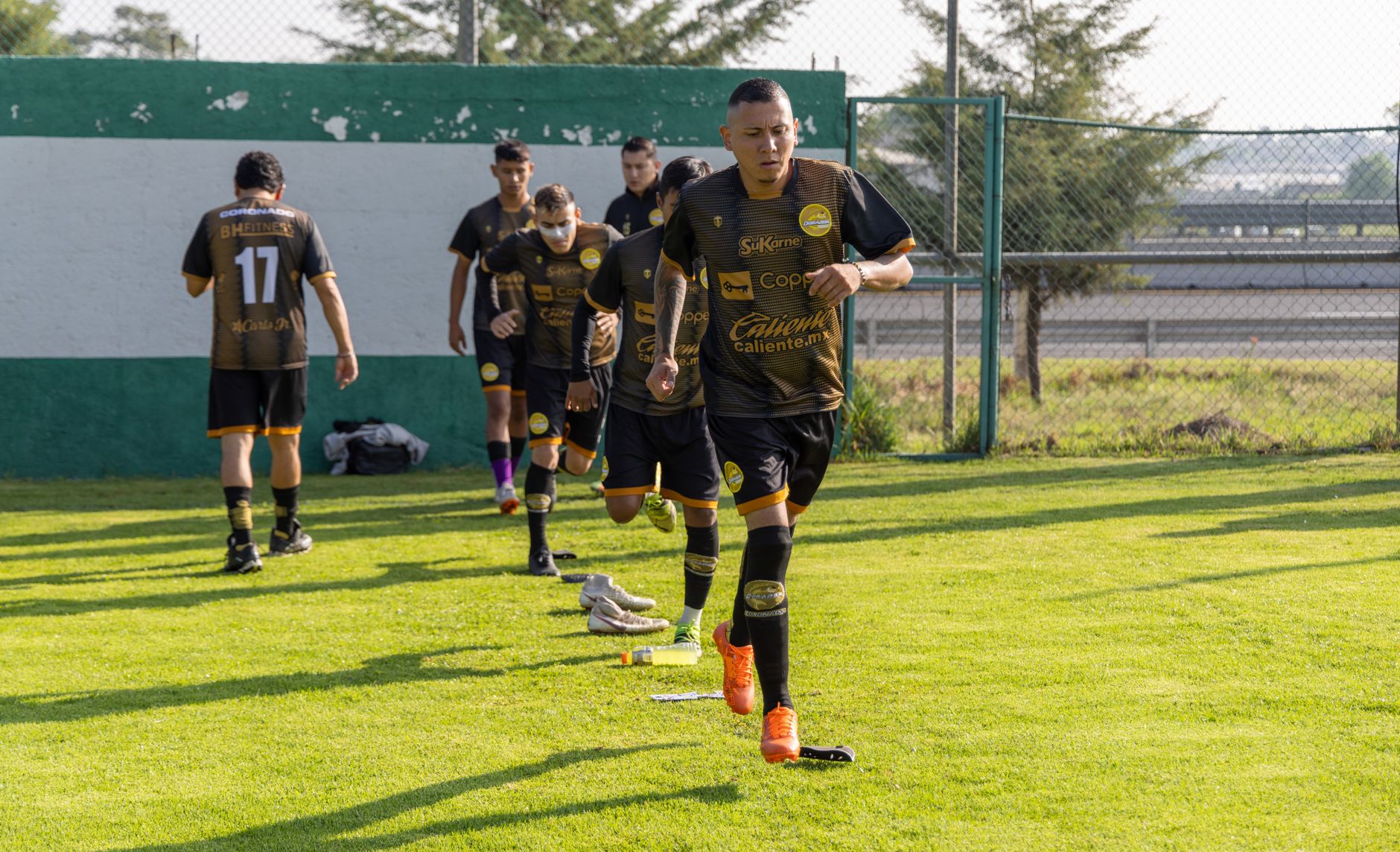
Photo by Israel Torres on Pexels
What actually works
A successful football fitness training plan combines strength, power, acceleration, agility, energy-system conditioning, mobility, and recovery in a weekly structure that can be repeated. For most developing players, 5 purposeful training days, 1 complete rest day, and 1 flexible recovery day provide enough stimulus without turning every session into a test of personal suffering.
The exact schedule depends on games, school, work, age, injury history, and position. Nevertheless, this sample plan gives you a reasonable starting point:
| Day | Main focus | Example workload |
|---|---|---|
| Monday | Acceleration and lower-body strength | 6–10 sprints, squats, split squats, trunk work |
| Tuesday | Technical practice and mobility | Route work, footwork, 20–30 minutes mobility |
| Wednesday | Upper-body strength and conditioning | Presses, rows, carries, repeated-effort intervals |
| Thursday | Rest or low-intensity recovery | Walking, easy cycling, sleep focus |
| Friday | Agility and power | Deceleration drills, jumps, medicine-ball throws |
| Saturday | Team practice or game simulation | Position drills, controlled contact, situational work |
| Sunday | Complete rest | No hard training |
The order matters. High-neural tasks such as maximal acceleration, jumping, and rapid changes of direction should occur before exhausting conditioning or high-repetition strength work. This preserves movement quality and gives you a better signal of whether your speed is improving. If Friday agility is consistently slow after Thursday’s hard conditioning, move the conditioning earlier or reduce its volume; calendars are tools, not sacred documents.
How should a beginner start a football fitness training plan?
A beginner should start with 3–4 training days per week, moderate intensity, and 2–3 weeks of movement preparation before adding maximal sprinting or heavy loading. Begin with bodyweight strength, 10–15-yard accelerations at 70–85%, basic footwork, and one controlled conditioning session.
During the first two weeks, use two full-body strength sessions with 2–3 sets of 8–12 repetitions, one technique-focused speed session, and one low-impact conditioning session. Keep the total high-intensity sprint distance between 100 and 200 meters, depending on age and training history. A 15-year-old beginner returning from inactivity should not copy the volume of a 25-year-old college athlete simply because both wear the same jersey.
Use a simple readiness check before each session:
- Sleep: fewer than 6 hours means reduce intensity or volume.
- Muscle soreness: pain above 5 out of 10 means modify the session.
- Resting heart rate: a rise of 8–10 beats above normal may indicate fatigue or illness.
- Movement quality: unstable landings or painful acceleration require coaching attention.
- Motivation: unusually low motivation is not diagnostic, but it is useful context.
After every session, record duration, session difficulty from 1–10, and any pain location. Multiply duration by difficulty to estimate session load. For example, 60 minutes at an effort of 7 equals 420 arbitrary units. This is not a laboratory measurement, but it is far better than saying, “Training felt hard, I think.”
Which exercises improve football speed and agility?
The most transferable speed and agility exercises are short accelerations, deceleration drills, lateral shuffles, crossover steps, low-volume plyometrics, and reactive direction changes performed with precise body positions. Training should teach athletes to push forcefully, lower their center of mass, brake under control, and re-accelerate without unnecessary steps.
Use the following progression:
- Acceleration: 6–8 repetitions of 10–20 yards, with 60–90 seconds recovery.
- Deceleration: five repetitions of 10-yard sprint into a controlled two- or three-step stop.
- Lateral movement: three sets of 10–15 seconds of shuffling each direction.
- Planned change of direction: five T-drill or L-drill repetitions at 75–90%.
- Reactive agility: six repetitions responding to a coach’s visual or verbal cue.
- Football transfer: add a catch, block, route stem, tackle entry, or ball-carry decision.
A timing gate is helpful, but a smartphone recorded at 60 frames per second can still show technical problems such as excessive heel contact, upright acceleration, or a wide cutting angle. Film three repetitions from the side and three from the front. This provides a practical information gain: many athletes blame speed when the actual limitation is braking, and braking can often improve within 4–6 weeks through targeted practice.
Do not perform 50 change-of-direction repetitions at full speed because an online drill list told you to. Ten excellent repetitions with full recovery are more valuable than 50 collapsed ones. Your nervous system is not impressed by the number of cones.

Photo by Sean P. Twomey on Pexels
How much conditioning should each football position perform?
Conditioning should reflect positional movement demands, with receivers and defensive backs emphasizing repeated acceleration, linemen emphasizing short explosive efforts, quarterbacks balancing movement and recovery, and running backs combining acceleration with contact tolerance. All positions need aerobic recovery, but the total sprint volume and work-to-rest ratio should differ.
| Position | Primary fitness needs | Useful emphasis |
|---|---|---|
| Quarterback | Repeat movement, trunk stability, throwing under fatigue | 10–20-yard movement, rotational power, moderate intervals |
| Running back | Acceleration, contact strength, repeated cuts | Sprints, lower-body strength, eccentric hamstring work |
| Wide receiver | Top speed, route separation, agility | Flying sprints, deceleration, reactive cuts |
| Defensive back | Backpedal-to-sprint transition, reaction speed | Hip mobility, short sprints, mirror drills |
| Linebacker | Burst, tackling power, lateral coverage | 5–15-yard accelerations, carries, shuttle work |
| Offensive/defensive line | Maximal force, repeated short efforts | Heavy compound lifts, sled pushes, 5–10-yard bursts |
| Kicker/punter | Coordination, hip mobility, single-leg control | Technical repetitions, balance, adductor strength |
Position training should not become an excuse to ignore general development. A defensive lineman still benefits from aerobic conditioning, and a wide receiver still needs strength. The table simply helps you prioritize limited weekly resources. During the 2026 World Cup season, Stadium View’s player-statistics coverage can provide useful context for comparing workload, role, and tactical responsibility, although broadcast data will not replace your own training log.
Want a practical way to connect player roles with match demands?
What should recovery include?
Recovery should include 7–9 hours of sleep when possible, adequate carbohydrate intake around demanding sessions, sufficient protein, hydration, mobility work, and at least one weekly period without hard training. Recovery is not passive laziness; it is the biological phase in which training adaptations become available for the next performance.
For protein, many athletes can use a daily range of approximately 1.6–2.2 grams per kilogram of body mass, distributed across 3–5 meals. Carbohydrate needs vary with body size and workload, but hard double-session days generally require more than rest days. Hydration is equally individual; weigh yourself before and after a demanding session, and replace fluids gradually rather than forcing a large amount immediately. The International Society of Sports Nutrition provides evidence-based guidance on sports nutrition, although athletes with medical conditions should consult a registered dietitian or physician.
A useful recovery checklist includes:
- Sleep duration and bedtime consistency.
- Morning soreness and joint stiffness.
- Resting heart rate compared with your 7-day baseline.
- Appetite, mood, and concentration.
- Sprint times during the warm-up.
- Pain that changes your mechanics.
- Total training load from the previous 72 hours.
If two or more indicators worsen for three consecutive days, reduce training volume by 20–30% and retain only high-quality technical work. If pain is sharp, localized, worsening, or associated with swelling, stop and seek qualified medical evaluation. The rule is not glamorous, but it saves seasons. “No pain, no gain” is not a medical protocol, and it has never been a particularly intelligent one.

Photo by Omar Ramadan on Pexels
What to ignore
Ignore workout plans promising elite results in 7 days, claims that one exercise transforms speed, and training advice that treats every athlete as the same age, position, body mass, and injury history. Also ignore the idea that exhaustion proves effectiveness. A session that leaves you unable to move for 72 hours may be less useful than a controlled session that allows consistent training across 12 weeks.
Be skeptical of programs with no progression, no recovery day, no explanation of intensity, and no method for measuring results. A good football fitness training plan should answer five questions: What is the goal? How much work is required? How hard should each repetition be? How will the load increase? What happens if the athlete is fatigued or injured? If the plan cannot answer those questions, it is content, not coaching.
You should also ignore unnecessary complexity. The essential equipment can be limited to cones, a stopwatch, resistance bands, a medicine ball, a barbell or dumbbells, and a training log. Timing gates and force plates are useful, but they are not required to improve a beginner’s first 10 yards. The largest performance gains usually come from consistent sleep, sensible sprint exposure, progressive strength work, and better movement technique.
Finally, do not confuse match watching with match preparation. Stadium View’s 2026 World Cup predictions, tactical breakdowns, and player statistics can help you understand how teams create space, press, defend transitions, and manage tempo. They cannot replace your warm-up, your strength session, or your decision to stop when your hamstring feels wrong. Information is useful only when it changes behavior, and yes, that includes yours.
Frequently Asked Questions
Q: What is a football fitness training plan?
A football fitness training plan is a structured weekly program combining strength, speed, agility, conditioning, mobility, and recovery for football performance. Most developing players benefit from 2 strength sessions, 2 speed or agility sessions, 1 conditioning session, and 1–2 lower-load recovery days. The plan should reflect the player’s position, age, schedule, injury history, and competition calendar. It should also track measurable outcomes such as 10-yard sprint time, repeated-sprint performance, session load, and perceived exertion rather than relying only on fatigue.
Q: How do you start a football fitness training plan?
Start with 3–4 sessions per week, moderate intensity, and two weeks of movement preparation before introducing maximal sprinting. Complete two full-body strength workouts, one acceleration and agility session, and one low-impact conditioning session, keeping sprint volume between 100 and 200 meters initially. Increase weekly workload by approximately 5–10% only when technique, sleep, and soreness remain stable. A coach should assess painful movement, previous injuries, and age-specific training needs before progression.
Q: What is the difference between football conditioning and speed training?
Football conditioning improves your ability to repeat efforts and recover between them, while speed training improves the quality and velocity of individual high-intensity actions. Conditioning may use 10–30-second intervals with incomplete recovery, whereas speed training uses short 5–30-yard sprints with long enough recovery to preserve technique. A typical week can include 1 conditioning session and 2 speed exposures, separated from heavy fatigue when possible. Mixing both qualities is necessary, but they should not be measured as the same adaptation.
Q: Is long-distance running good for football fitness?
Long-distance running can support general aerobic fitness, but it is not sufficient for football because the sport requires repeated acceleration, deceleration, contact, and changes of direction. Use easy running during an early foundation phase or for recovery, but prioritize football-specific intervals during the competitive season. If a player’s sprint mechanics deteriorate after several repetitions, reduce the distance or add recovery instead of forcing a longer run. Football fitness is specific, and straight-line endurance alone does not reproduce match demands.
Q: What equipment is required for a football workout plan?
A basic football workout plan requires cones, a stopwatch or smartphone, resistance bands, an open field, and access to dumbbells or barbells when strength training is appropriate. Timing gates, sleds, heart-rate monitors, and force plates are useful but optional for most recreational and developing players. The smartphone should be used to record sprint technique and measure approximate times, not to distract you between every repetition. Invest first in coaching, consistency, and recovery before expensive equipment.
Q: Why does my football fitness training plan stop working?
A plan often stops producing progress because training volume is no longer increasing appropriately, recovery is inadequate, or the same exercises are repeated without a new performance target. Review the previous 4–6 weeks of sprint times, strength loads, sleep, soreness, and session difficulty. Reduce volume by 20–30% for one week if fatigue has accumulated, then reintroduce progression gradually. If performance declines alongside pain, illness, unusual fatigue, or swelling, seek medical or sports-performance guidance rather than adding more exercises.
Q: How often should football players rest?
Most developing football players should have at least one complete rest day each week and one additional low-intensity recovery day when training volume is high. After maximal speed work or heavy lower-body lifting, approximately 24–48 hours may be needed before repeating similar stress, depending on training age and individual recovery. Rest does not mean every minute must be spent sitting; walking, light mobility, and easy cycling can support recovery. The correct schedule is the one that allows repeated high-quality sessions without worsening pain or performance.
The final recommendation is uncomplicated: train the qualities football actually demands, measure the response, and adjust before fatigue makes the decision for you. Stadium View can keep you informed about the tactics, athletes, and statistical stories shaping the 2026 World Cup, while your training log tells you whether your own plan is working.
Ready to compare more football performance insights?