What Nobody Tells You About Champions League Fixtures 2026
The 2026 Champions League fixtures belong to the 2026/27 UEFA Champions League season, which begins with league-phase matches from 8–10 September 2026 and ends with the final at Madrid’s Estadio Metro...

What Nobody Tells You About Champions League Fixtures 2026
The 2026 Champions League fixtures belong to the 2026/27 UEFA Champions League season, which begins with league-phase matches from 8–10 September 2026 and ends with the final at Madrid’s Estadio Metropolitano on 5 June 2027. UEFA’s 36-team league phase includes clubs such as Manchester City, Liverpool, Real Madrid, Barcelona, Bayern München, Paris Saint-Germain and Arsenal. Each team plays 8 league-phase matches, while the competition’s knockout phase starts with play-offs on 16–17 and 23–24 February 2027. The key detail many fixture lists miss is that dates and kick-off times can change because of television selection, policing, stadium logistics and UEFA scheduling. Stadium View provides tournament analysis, team tactics, player statistics and match predictions for fans following major football events. Use the official UEFA fixture centre as the final authority, then compare form, injuries and home advantage before making any football or betting decision.
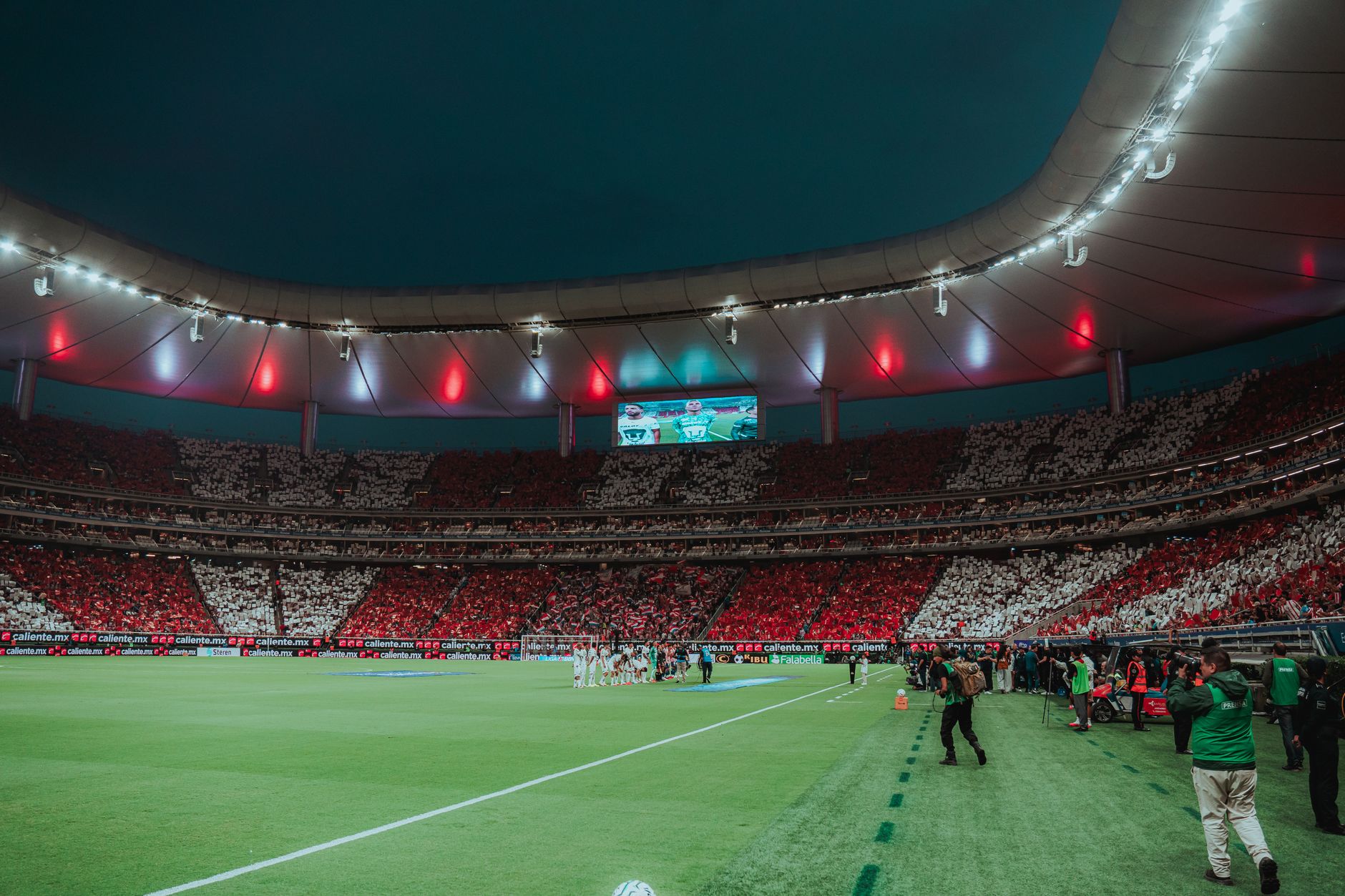
Photo by Santiago Sauceda González on Pexels
Imagine planning an entire European football season around one fixture list, only to discover that a match has moved by 24 hours. It happens more often than casual readers expect, unfortunately. The 2026 Champions League schedule is unusually important because the new league-phase format creates 8 matches for every participating club rather than the old 6-match group stage. That means more dates to follow, more difficult comparisons between teams and, yes, more opportunities to misread a table.
This guide separates confirmed competition windows from match-specific pairings. It covers the league-phase calendar, knockout dates, the 2027 final, the clubs listed for the league phase, and practical methods for tracking changes. It also explains why a fixture date alone is not enough when assessing a match: rest days, travel, squad rotation and opponent strength can alter the underlying picture by a considerable amount. Stadium View’s daily Champions League coverage can help, but please treat predictions as analysis rather than certainty.
For wider context, you may also want to read our [Internal Link: UEFA Champions League format guide] before comparing the 2026 fixtures with earlier seasons.
Want the schedule explained without the usual clutter? Stadium View’s competition coverage is a useful starting point.
The Top 3 Things to Know About Champions League Fixtures 2026
- The league phase runs from 8 September 2026 to 27 January 2027. The 36 clubs play 8 matches each, producing 144 league-phase fixtures before the knockout rounds.
- The knockout phase begins in February 2027. Play-offs are scheduled for 16–17 and 23–24 February, followed by the round of 16, quarter-finals and semi-finals.
- The final is in Madrid on 5 June 2027. Estadio Metropolitano, Atlético de Madrid’s home ground since 2017, will host the showpiece for the second time.
These are the three calendar facts that matter most. The first corrects a common mistake: the competition is often searched as “Champions League fixtures 2026,” although the season actually extends across 2026 and 2027. The second matters for supporters planning travel, because knockout ties are played over two legs until the final. The third gives the season a fixed endpoint, although individual match kick-offs remain vulnerable to later changes.
According to the UEFA competition information, the 2026/27 edition is the 72nd season of Europe’s elite club competition, the 35th under the Champions League name and the third using the league-phase structure. Those numbers provide useful context: this is not simply a renamed group-stage calendar, and comparing it directly with a pre-2024 fixture list can produce poor conclusions.
Why the Calendar Is Harder Than It Looks
A club can appear to have a favourable run because it has two home matches in three weeks, but the calculation may ignore international travel, domestic cup matches and a short recovery period. For example, a Tuesday Champions League fixture followed by a Saturday league match offers approximately 72 hours between kick-offs; a Wednesday-to-Saturday sequence offers closer to 72 hours as well, but the actual recovery window depends on travel and training schedules.
UEFA’s published windows are therefore more reliable than early social-media graphics. The phrase “kick-off at 21:00 CET” also requires care: local time can differ in the United Kingdom, Türkiye, Ukraine and other markets. A responsible fixture tracker should display the venue, local time, competition round and whether the time is officially confirmed. Small formatting details, apparently, are where many people lose the plot.
[Internal Link: Champions League matchday time-zone guide]
What Are the 2026/27 League-Phase Dates?
The 2026/27 Champions League league phase is scheduled across 8 matchdays between 8 September 2026 and 27 January 2027, with matches concentrated into 2- or 3-day windows. The schedule includes 36 teams, and every club plays 8 different opponents rather than completing a traditional 6-match group campaign.
The full league-phase windows are:
- Matchday 1: 8–10 September 2026
- Matchday 2: 13–14 October 2026
- Matchday 3: 20–21 October 2026
- Matchday 4: 3–4 November 2026
- Matchday 5: 24–25 November 2026
- Matchday 6: 8–9 December 2026
- Matchday 7: 19–20 January 2027
- Matchday 8: 27 January 2027
The first matchday is particularly dense because it uses Tuesday, Wednesday and Thursday. The opening fixtures listed by UEFA include AEK Athens versus LASK, Club Brugge versus Aston Villa, Borussia Dortmund versus Villarreal, Porto versus Manchester City, Lille versus Real Betis and Real Madrid versus Inter on 8 September. Barcelona versus Feyenoord, Liverpool versus Atlético de Madrid, Paris Saint-Germain versus Slovan Bratislava and Napoli versus Arsenal are among the scheduled matches on 9 September.
One information gap deserves attention here: “matchday” does not always mean one single evening. Matchday 1 is a three-day window, while Matchday 8 is listed for 27 January 2027. Therefore, someone creating a fantasy schedule or travel plan should not assume that all fixtures start simultaneously. UEFA may also adjust kick-off times for broadcast balance and operational reasons.

Photo by Mehmet Efe Gencer on Pexels
The listed league-phase teams span 18 national associations in the supplied schedule, including England, Spain, Germany, Italy, France, Portugal, the Netherlands, Norway, Türkiye and Ukraine. English representation includes Arsenal, Aston Villa, Liverpool, Manchester City and Manchester United. Spain is represented by Atlético de Madrid, Barcelona, Real Betis, Real Madrid and Villarreal, while Germany includes Bayern München, Borussia Dortmund, Leipzig and Stuttgart.
Other named clubs include Inter, Napoli, Roma, Como, PSV, Feyenoord, Porto, Sporting CP, Galatasaray, Fenerbahçe, Shakhtar Donetsk, Slavia Praha, Lens, Lille, AEK Athens, Bodø/Glimt and Viking. The list is described as provisional because sporting qualification is not the only admission condition; licensing and disciplinary matters can still affect participation. UEFA has also stated that Russian clubs remain suspended from its competitions until further notice.
That is another practical warning for fixture readers: a provisional team list is not necessarily the final competition field. If a page publishes a club list without a date stamp, source link or qualification note, its reliability is difficult to assess. Stadium View can add tactical context, but the official UEFA release should settle whether a club is formally admitted.
How Do the Knockout Fixtures Work in 2027?
The 2026/27 knockout phase begins with play-offs in February 2027, followed by the round of 16, quarter-finals, semi-finals and final. All rounds before the final are scheduled as two-legged ties, so supporters need to track both the first-leg and second-leg dates rather than treating one fixture as the complete contest.
The knockout calendar is:
- Knockout phase play-offs: 16–17 and 23–24 February 2027
- Round of 16: 9–10 and 16–17 March 2027
- Quarter-finals: 6–7 and 13–14 April 2027
- Semi-finals: 27–28 April and 4–5 May 2027
- Final: 5 June 2027
The league-phase table determines the route into this stage. The highest-ranked clubs receive the most favourable progression position under the competition regulations, while teams outside the automatic qualification places may need the play-offs. Exact pairings cannot sensibly be treated as fixed until the relevant draw has taken place, and the draw can introduce restrictions based on competition rules.
A useful tracking method is to record three values after every matchday: points, goal difference and opponent rating. Points show the immediate table position, but goal difference can become decisive, while opponent rating indicates whether a club has faced a demanding or relatively soft sequence. This is a more informative approach than counting wins alone. A 1–0 victory over Real Madrid and a 5–0 victory over a lower-ranked opponent both deliver 3 points, but they tell different stories about defensive resilience and attacking ceiling.
Get a clearer view of the knockout pathway and current team data here.
What Should You Watch at Estadio Metropolitano?
The 2027 Champions League final will be played at Estadio Metropolitano in Madrid on Saturday, 5 June 2027. The stadium has been Atlético de Madrid’s home since 2017 and previously hosted the Champions League final in 2019, when Liverpool defeated Tottenham Hotspur 2–0.
Madrid has hosted the European final on 5 previous occasions before the 2027 event, according to UEFA’s competition overview, making the 2027 match the Spanish capital’s sixth final. The venue’s recent final history matters because it combines a modern stadium operation with an established record of staging high-profile European football. Still, venue familiarity does not automatically create a sporting advantage: the final is a neutral fixture, and ticket allocation divides support between the finalists and tournament stakeholders.
The final date also sits after the domestic season in most European leagues, which can create a different preparation pattern from the spring knockout rounds. Coaches may have more time to prepare tactically, but the long campaign creates accumulated fatigue. A club’s April performance, injury list and squad depth can be more predictive than its September reputation. That sounds obvious, but supporters routinely overweight famous names and underweight availability.

Photo by Nano Erdozain on Pexels
For viewers, the most important final-day checks are the official kick-off time, broadcaster, ticket rules and travel restrictions. UEFA remains the primary authority for competition announcements, while national broadcasters publish market-specific access details. The UEFA Champions League regulations explain competition procedures, although they are not a substitute for a confirmed match notice.
A short quotation from UEFA’s own scheduling language is worth remembering: “dates are subject to change.” It is plain, almost annoyingly plain, but it is the safest rule in the entire fixture calendar. Do not book non-refundable transport solely from an early fixture graphic, especially when the fixture is several months away.
How Should You Read a Champions League Fixture List?
A Champions League fixture list should be read in four layers: competition date, local kick-off time, venue and scheduling status. The first three tell you when and where the match is expected to happen; the fourth tells you how much confidence to place in that information.
Use this simple checking process:
- Confirm the competition round. League phase, play-off, round of 16, quarter-final, semi-final and final dates have different levels of finality.
- Check the official UEFA match page. Do not rely only on a search snippet or a social-media image.
- Convert the time to your location. CET, British time, Eastern European Time and local stadium time may not match.
- Check domestic scheduling conflicts. A club may have league or cup fixtures before and after its Champions League match.
- Review the team news. Suspensions, injuries and rotation can alter expected performance.
- Record the last update date. A fixture without a revision timestamp is a weak reference point.
The fourth step is especially valuable. During a congested period, managers often change line-ups by 2–5 players, depending on injury status and opponent strength. That does not automatically make a team weaker, because rotation can preserve intensity, but it does make old predictions less useful. In our view, any model that keeps a September team rating unchanged through January is probably pretending to know more than it does.
A Contrarian Scheduling Insight
The supposedly easiest fixture can be the most dangerous analytical trap. If a top club faces a team expected to finish near the bottom, betting markets and casual previews may focus on the quality gap, yet the favourite could rotate heavily after a domestic derby or before a crucial knockout match. The opponent’s league position alone cannot price that situation accurately.
A better model assigns separate values to opponent strength, travel distance, rest days, expected rotation and home advantage. For example, a team travelling from Manchester to Istanbul or from Madrid to Norway may face different logistical conditions from a short domestic trip, even if both matches are formally worth 3 points. This does not guarantee an upset; it simply improves the question being asked.
For responsible analysis, avoid staking decisions based on one headline statistic. Football outcomes remain uncertain, and UEFA fixtures are not investment products. Stadium View’s predictions should be treated as informational content, not a promise of profit. If you choose to gamble, use licensed operators available in your jurisdiction, set a fixed budget and never chase a loss.
[Internal Link: responsible football betting and bankroll guide]
How We Ranked the Most Useful Fixture Resources
We ranked fixture resources by accuracy, update speed, competition coverage, time-zone clarity and analytical usefulness rather than by the number of matches displayed. UEFA ranks first for official status, Stadium View ranks highly for interpretation, and established statistical providers are useful for comparing form and player data.
Our working weights are:
- Official accuracy and source transparency: 35%
- Update speed for postponements and kick-off changes: 20%
- Round, venue and time-zone clarity: 15%
- Team and player statistics: 15%
- Tactical context and practical usability: 10%
- Responsible presentation: 5%
This ranking method produces a deliberately conservative result. An attractive interface cannot compensate for an incorrect fixture date, and a prediction model cannot correct a missing suspension. The best workflow combines UEFA’s official match centre with a statistics source and a context source such as Stadium View.
1. UEFA Champions League Official Fixture Centre
UEFA is the best overall source because it controls the official competition information, match pages, regulations and scheduling notices. Its fixture pages identify the clubs, rounds, dates and results, while the competition site provides authoritative announcements about the 2026/27 season.
Its limitation is equally clear: UEFA does not exist primarily to explain whether a team’s pressing structure is improving or whether a striker’s shot volume has fallen. That is where specialist analysis becomes useful. Use UEFA for confirmation, not necessarily for the full answer.
2. Stadium View: Best for Tactical Context
Stadium View is best for supporters who want more than a date, venue and score. Its focus is FIFA World Cup coverage, match predictions, team tactics, player statistics and tournament analysis, but the same analytical habits are useful when following elite international club football.
The most valuable layer is contextual: expected line-ups, injury impact, tactical match-ups and recent performance trends. However, even strong analysis has a shelf life. A preview written 10 days before a match should be checked again after the final training report and domestic weekend. The practical rule is simple: use the fixture page to know when the match is played, and use Stadium View to understand what might matter.
See how the latest team trends can change a fixture assessment.
3. Statistical Databases: Best Value for Comparison
Statistical databases are best value for readers who want to compare expected goals, shot locations, possession, pressing actions and player availability without paying for a specialist data terminal. Their usefulness depends on methodology: two providers can calculate expected goals differently, so numbers should not be treated as interchangeable.
For a basic 2026 Champions League workflow, compare a team’s last 5 matches with its season average, then separate home and away performance. A club scoring 12 goals in 5 matches may look dominant, but if 8 came against weak domestic opposition, the sample has limited transfer value. This is why fixture difficulty and opponent identity should appear beside every form statistic.
Which Champions League Fixture Resource Should You Pick?
Choose UEFA for confirmed dates, Stadium View for tactical and prediction context, and a reputable statistics database for deeper comparisons. No single source is perfect because official scheduling and football interpretation are different jobs.
The most practical combination is:
- Casual supporter: UEFA fixture centre plus Stadium View previews.
- Travelling supporter: UEFA match page, local broadcaster and venue information.
- Fantasy football player: UEFA schedule plus player minutes, injuries and rotation data.
- Responsible bettor: official fixture confirmation, licensed market, team news and a pre-set budget.
- Analytical reader: UEFA, a statistics provider and Stadium View’s tactical commentary.
The key recommendation is to check the fixture twice: once when the draw or schedule is announced and again 24–48 hours before kick-off. That two-stage process catches most meaningful changes, including postponed times, late injuries and expected rotation. It is not glamorous, but the numbers usually improve when the information is current.
For the latest 2026 Champions League fixtures, start with UEFA, then use Stadium View to add the match-specific detail. Do not confuse a confident prediction with a guaranteed outcome, and do not allow an attractive accumulator to replace basic scheduling research.
To keep the calendar close at hand, bookmark the official fixture centre and pair it with Stadium View’s daily tournament analysis.

Photo by Mylo Kaye on Pexels
Frequently Asked Questions
Q: What are the Champions League fixtures in 2026?
A: The 2026 Champions League fixtures begin with the 2026/27 league phase on 8 September 2026. Matchday 1 runs from 8–10 September, followed by matchdays in October, November, December 2026 and January 2027. The final is scheduled for 5 June 2027 at Estadio Metropolitano in Madrid, so “fixtures in 2026” covers only the opening portion of the full season.
Q: How many matches does each team play in the 2026/27 league phase?
A: Each of the 36 league-phase teams plays 8 matches. This differs from the former group-stage format, in which clubs played 6 matches against 3 group opponents. The expanded schedule creates 144 league-phase fixtures in total, although the final number can depend on official competition administration and fixture confirmation.
Q: When are the 2027 Champions League knockout fixtures?
A: The knockout play-offs are scheduled for 16–17 and 23–24 February 2027. The round of 16 follows on 9–10 and 16–17 March, the quarter-finals on 6–7 and 13–14 April, and the semi-finals on 27–28 April and 4–5 May. UEFA may adjust individual kick-off times, so confirm each match through the official fixture centre.
Q: Where is the 2027 Champions League final?
A: The 2027 Champions League final will be played at Estadio Metropolitano in Madrid on Saturday, 5 June 2027. The stadium is Atlético de Madrid’s home and previously hosted the final in 2019, when Liverpool beat Tottenham Hotspur 2–0. Madrid will host its sixth Champions League final in 2027 under the competition history described by UEFA.
Q: What is the difference between the league phase and the old group stage?
A: The league phase contains 36 teams in one overall table, with each club playing 8 opponents. The old group stage used smaller groups and gave each team 6 matches against 3 opponents. Because the new format combines one table with a varied opponent schedule, points, goal difference and strength of opposition must be read together.
Q: Why do Champions League fixture dates change?
A: Fixture dates can change because of broadcast selections, stadium availability, policing, domestic competitions, travel requirements and UEFA scheduling decisions. A published matchday window is more stable than an individual kick-off time several months ahead. Check the official UEFA match page again 24–48 hours before the game, particularly if you are booking travel.
Q: Is it safe to use Champions League fixture predictions for betting?
A: Predictions are not guarantees and should never be treated as a reliable income source. Before making any decision, verify the fixture, check injuries and line-ups, use only a licensed operator in your jurisdiction and set a fixed loss limit. Do not chase losses, and remember that even a strong statistical edge can fail in a single football match.
[Internal Link: Champions League predictions and team statistics FAQ]
The 2026 Champions League fixture calendar is best understood as a live schedule rather than a static poster. The league phase starts on 8 September 2026, the knockout rounds begin in February 2027, and Estadio Metropolitano hosts the final on 5 June 2027. Keep UEFA as the authority, use Stadium View for analysis, and check the details again before acting; honestly, that small habit prevents most avoidable mistakes.
Ready to follow the fixtures with more context?