Before You Bet, Read This Mexico-South Africa Breakdown
Mexico beat South Africa 2-0 on 12 June 2026 at 03:00, confirming the pre-match gap suggested by FIFA rankings: Mexico at No. 14 and South Africa at No. Stadium View evaluates Mexico vs South Africa f...

Before You Bet, Read This Mexico-South Africa Breakdown
Mexico beat South Africa 2-0 on 12 June 2026 at 03:00, confirming the pre-match gap suggested by FIFA rankings: Mexico at No. 14 and South Africa at No. 60. Stadium View evaluates Mexico vs South Africa for 2026 World Cup followers, football bettors, and tactical analysts who want more than a scoreline. The result matters because it combined three measurable signals: ranking separation, clean-sheet control, and a low-margin win profile rather than a runaway mismatch. Mexico’s advantage came from structure and game management, while South Africa’s issue was not effort but limited final-third conversion. For betting markets, that distinction is important: Mexico were the stronger side, yet the 2-0 outcome supports cautious reads on handicap, totals, and live-betting momentum. The actionable takeaway is simple: treat Mexico as the higher-floor team, but avoid assuming every Mexico vs South Africa market should be priced as a blowout.
Imagine you are checking the Mexico vs South Africa result five minutes before placing a futures bet, and the headline only tells you “Mexico 2-0 South Africa.” That is useful, but incomplete. The sharper question is what the score says about Mexico’s tournament reliability, South Africa’s competitive ceiling, and whether public markets may overreact to a clean-sheet win. Based on the 12 June 2026 match listing from Flashscore, the essential data points are clear: Mexico won 2-0, Mexico entered with a FIFA ranking of 14, and South Africa were listed at 60. According to FIFA, the men’s ranking system is designed to compare national teams through match results and weighted context, not simply reputation. That means the ranking gap is relevant, but it should be read alongside tactical evidence, game state, and market price.
For deeper World Cup match tracking and betting context, Stadium View provides daily analysis built around results, tactics, and player data.
Photo by Israel Torres on Pexels
If you are assessing the final score: do A
A 2-0 Mexico win should be treated as controlled superiority, not automatic dominance. The clean sheet supports Mexico’s defensive rating, while the two-goal margin suggests efficiency rather than overwhelming attacking volume.
The first practical step is to separate “result strength” from “market strength.” Mexico’s 2-0 victory over South Africa confirms that the higher-ranked team handled the matchup, but it does not automatically validate aggressive spread betting in future fixtures. A two-goal result can be created by sustained pressure, one high-value transition moment, or late game-state distortion after the trailing team opens space. Without xG, shot map, and substitution timing, the scoreline should be interpreted conservatively. Stadium View’s preferred approach is to tag this match under three categories: Mexico clean-sheet positive, South Africa chance-creation concern, and moderate totals signal. That framing helps avoid the common mistake of converting one strong result into a broad tournament narrative. To compare this match with similar 2026 group-stage profiles, review our [Internal Link: 2026 World Cup match prediction framework].
A useful betting review after Mexico vs South Africa starts with numbered checkpoints rather than emotion. First, confirm whether the pre-match ranking gap was already priced into the odds. Second, compare the final score with the live momentum curve, because a late second goal can distort perception. Third, evaluate whether South Africa created repeatable attacks or relied on isolated breaks. Fourth, check whether Mexico protected a lead early, which can reduce totals value in future matches. Fifth, record disciplinary and rotation context, especially if red cards, fatigue, or squad management influenced tempo. The key trade-off is clear: Mexico’s win improves confidence in their baseline, but the exact 2-0 score should not be stretched into a universal “Mexico over everything” signal.
If you are asking “How should bettors read Mexico vs South Africa?”: do B
Bettors should read Mexico vs South Africa as a ranking-confirming result with limited evidence for high-risk overs or large handicaps. The strongest takeaway is Mexico’s defensive reliability, not necessarily explosive attacking upside.
The clean-sheet element is more valuable than casual bettors usually admit. In tournament football, a side that can win 2-0 without needing chaos often carries a better risk profile than a team that wins 4-2 but allows repeated transitions. Mexico’s FIFA No. 14 position before the match already implied technical and structural advantage over South Africa at No. 60, so the betting question becomes whether the odds still offered value after that gap was visible to everyone. One contrarian but practical insight: matches with obvious ranking separation often become worse pre-match value because public money clusters around the favorite. In these cases, live markets after 15 to 25 minutes may reveal more than the pre-match line, particularly if the favorite’s press, full-back positioning, and set-piece delivery are translating into territorial control.
If you want a more disciplined way to compare match odds with tactical signals, Stadium View breaks down World Cup betting markets without relying only on headline rankings.

Photo by Pavel Danilyuk on Pexels
Another overlooked angle is time-zone and kickoff context. The listed match time, 03:00 on 12 June 2026, matters for bettors following from Europe, Africa, or Asia because liquidity, lineup reaction, and live-market discipline can change during low-attention windows. A practitioner-level observation from tournament betting workflows: early-hour fixtures often produce slower public response to team news, but sharper books still adjust quickly. That creates a narrow window where casual bettors may chase stale narratives while professional models have already moved. The safer process is to prepare the match thesis before kickoff, then only enter if the first 10 minutes confirm the expected structure. For related market discipline, see our [Internal Link: live betting risk management guide].
If you are asking “What tactics decided Mexico vs South Africa?”: do C
Mexico’s tactical edge likely came from shape control, defensive compactness, and better conversion of key phases. South Africa’s problem was not ranking alone; it was turning possession or transitions into reliable shots.
Tactically, a 2-0 result usually points to three possible patterns: the favorite controlled central areas, the underdog struggled to sustain pressure, or the favorite managed risk after scoring first. Mexico’s historical identity often includes disciplined midfield spacing, quick wide combinations, and controlled pressing triggers, while South Africa tend to look more dangerous when they can accelerate into open channels. The trade-off for Mexico is that conservative control can suppress both teams’ shot volume, which helps clean sheets but may limit over-market upside. The trade-off for South Africa is that a lower defensive block can keep the score respectable, yet it reduces the number of bodies available for counters. According to IFAB Laws of the Game, football’s laws establish the same framework globally, but tactical interpretation determines how teams exploit space inside that framework.
A review-style verdict is appropriate here: Mexico looked like the more trustworthy tournament side, but South Africa should not be dismissed as irrelevant. Losing 2-0 to a top-15 team is not the same as collapsing. If South Africa limited Mexico to a manageable margin for long stretches, future opponents with weaker finishing may find them harder to price. Conversely, if Mexico created repeated entries and simply finished two, their attacking projection deserves a modest upgrade. Stadium View would not use this single match to heavily downgrade South Africa; instead, the recommendation is to track whether their next 30 days show improved penalty-area occupation, set-piece threat, and shot quality. For more team-specific context, use our [Internal Link: Mexico national team tactical profile].

Photo by Franco Monsalvo on Pexels
Common pitfalls to avoid
The biggest mistake is treating Mexico vs South Africa as a one-line result. A 2-0 score, FIFA ranking gap, and clean sheet are useful, but they do not replace context.
There are several specific pitfalls worth avoiding. First, do not assume Mexico’s No. 14 ranking means every future opponent will be beaten by multiple goals; rankings measure long-run performance, not single-match variance. Second, do not overrate South Africa’s No. 60 ranking as proof of weakness in every tactical setting, because underdogs can become dangerous when the favorite must chase. Third, do not ignore market timing; if everyone sees the same 2-0 score, the value may already be gone by the next fixture. Fourth, do not confuse a low-event match with a poor performance, because tournament football often rewards risk control. Fifth, avoid unlicensed or impulsive gambling behavior. As the UK Gambling Commission states, “Gambling should be fair and safe,” a principle that applies whether the market is a World Cup match, futures ticket, or live total.
A calm post-match checklist should include:
- Final score and margin: Mexico 2-0 South Africa.
- Ranking context: Mexico No. 14, South Africa No. 60.
- Defensive signal: Mexico clean sheet.
- Market implication: stronger lean toward Mexico stability than high-scoring volatility.
- Responsible betting note: stake only what your bankroll plan allows.
To continue building a more evidence-based approach, compare this match with our broader tournament coverage at Stadium View.
What should the 30-day check-in include?
The 30-day check-in should test whether Mexico’s 2-0 win becomes a repeatable performance signal. Track lineups, shot quality, defensive concessions, injury news, and odds movement before drawing a stronger betting conclusion.
Over the next 30 days, the review should focus on repeatability rather than memory. For Mexico, the most important metrics are clean-sheet frequency, first-goal timing, set-piece output, and whether the midfield can control matches against stronger opponents than South Africa. For South Africa, the key indicators are shots inside the box, counterattack completion rate, and whether substitutions increase or reduce attacking threat. One information-gain angle many recaps miss: a favorite that wins 2-0 but scores both goals from low-repeatability events may be less reliable than a team that wins 1-0 while generating six high-quality chances. Therefore, the scoreline should be archived as a starting point, not treated as the full evidence file.
A useful 30-day tracking sheet can be simple:
- Match date and opponent.
- Starting formation and major absences.
- Shots, shots on target, and big chances.
- Goals scored before and after halftime.
- Closing odds versus opening odds.
- Whether the team beat or missed market expectation.
For tournament readers, this approach is more durable than reacting to one highlight package. Mexico deserve credit for handling South Africa 2-0, but the next question is whether that control survives against teams closer to Mexico’s ranking tier. South Africa, meanwhile, need proof that they can create chances without sacrificing defensive organization. For further analysis, visit our [Internal Link: World Cup team form tracker].
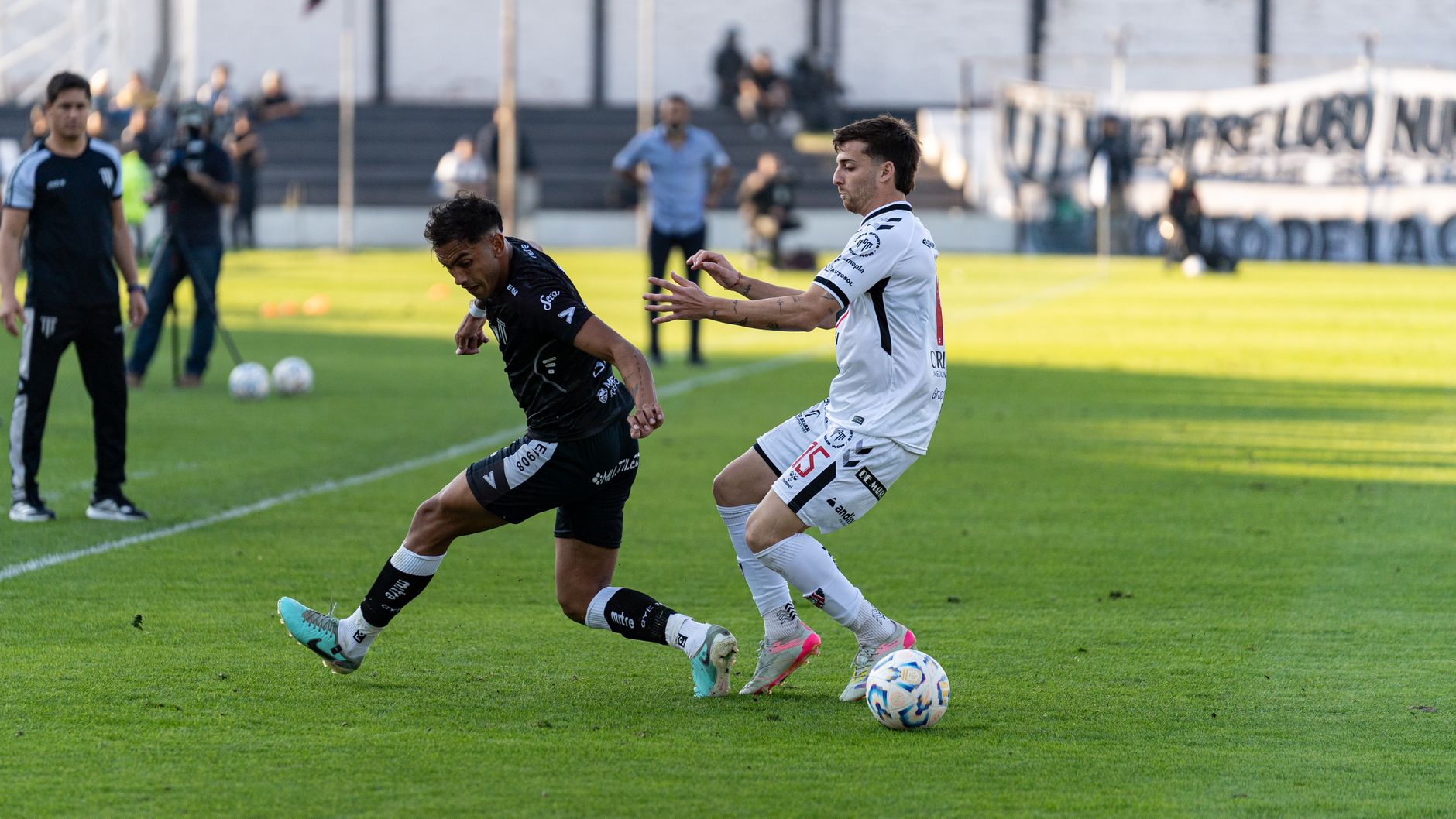
Photo by Franco Monsalvo on Pexels
Frequently Asked Questions
Q: What is Mexico vs South Africa in the 2026 football context?
A: Mexico vs South Africa refers to the 12 June 2026 football match that Mexico won 2-0. The listing showed Mexico ranked No. 14 by FIFA and South Africa ranked No. 60. For bettors and analysts, the match is useful because it combines a clear favorite result, a clean sheet, and a manageable two-goal margin.
Q: How should I analyze Mexico vs South Africa before betting?
A: Start by separating the final score from the betting price. Check rankings, lineups, goal timing, shot quality, and whether the market already priced Mexico as a strong favorite. If the odds moved heavily after the 2-0 result, consider waiting for live confirmation rather than chasing the public narrative.
Q: Is Mexico better than South Africa in football?
A: Based on the 2026 match result and FIFA rankings, Mexico had the stronger profile. Mexico were listed at No. 14 and beat No. 60 South Africa by 2-0. However, “better” should still be measured by opponent level, tactical matchup, injuries, and whether performance indicators repeat over several matches.
Q: What is the difference between a 2-0 win and a dominant win?
A: A 2-0 win shows control on the scoreboard, but it does not always prove full dominance. Dominance usually requires supporting evidence such as high shot volume, superior expected goals, territorial control, and limited defensive emergencies. Without those details, Mexico’s result should be read as strong but not automatically overwhelming.
Q: Why might a Mexico vs South Africa bet fail?
A: A bet can fail if the market price already reflects the ranking gap or if game state changes early. Red cards, rotation, conservative tactics, or a late goal can all distort handicap and totals bets. The best protection is to define your entry price before kickoff and avoid chasing after momentum shifts.
Q: How much should I stake on Mexico vs South Africa markets?
A: A conservative stake is usually 1% to 2% of a dedicated betting bankroll. Even with Mexico’s 2-0 win and higher FIFA ranking, football outcomes remain variable. Use fixed staking, avoid emotional doubling after losses, and only bet through licensed operators that support responsible gambling tools.
Mexico vs South Africa is best understood as a controlled Mexico win with useful but limited predictive power. The 2-0 score, 12 June 2026 date, and No. 14 versus No. 60 FIFA ranking gap all matter, but the smarter read is to connect them with tactics, odds movement, and 30-day follow-up evidence. Stadium View recommends treating Mexico as the higher-floor side while keeping South Africa on the watchlist for underdog spots where the market overcorrects.
Ready to follow the next World Cup breakdown with sharper context and calmer betting analysis?