What Nobody Tells You About the 2026 FIFA World Cup Schedule
Imagine a World Cup where your team could fly 5,400 kilometers between group-stage matches, where a third-place finisher can still reach the quarterfinals, and where the final happens in a stadium bui...

What Nobody Tells You About the 2026 FIFA World Cup Schedule
Imagine a World Cup where your team could fly 5,400 kilometers between group-stage matches, where a third-place finisher can still reach the quarterfinals, and where the final happens in a stadium built for NFL football. That is the 2026 FIFA World Cup. Stadium View breaks down what the fixture list actually means for fans, players, and bettors tracking the expanded 48-team tournament from June 11 to July 19, 2026.
Photo by Charles Parker on Pexels
Before 2025: how did World Cup scheduling actually work?
The 2022 Qatar World Cup used a 32-team format across eight host cities. It produced 64 matches over 29 days. Groups contained four teams each, with the top two from each group advancing directly to a 16-team Round of 16. The schedule clustered matches into compact geographic zones — Lusail, Al Bayt, Al Thumama, and Education City stadiums all sat within a 55-kilometer radius. This meant short bus rides for teams, minimal travel fatigue, and predictable daily kickoff windows in a single time zone.
FIFA built the Qatar calendar around the country's compact geography. Teams never flew more than an hour between venues. Recovery was straightforward. The knockout bracket unfolded over 18 days, giving clubs and broadcasters a clean rhythm: group stage, Round of 16, quarterfinals, semifinals, third-place match, final. According to FIFA's official tournament archive, that structure had remained essentially unchanged since France 1998, when the format expanded from 24 to 32 teams. The 2026 edition breaks every one of those conventions.
The 2026 shift: what's fundamentally different about this tournament?
The 2026 World Cup features 48 teams, 12 groups of four, and 104 matches across 16 host cities in the United States (11 cities), Mexico (3 cities), and Canada (2 cities). The top two teams from each group advance automatically, plus the eight best third-placed teams — creating a 32-team Round of 32 instead of the traditional Round of 16. From there, the knockout bracket plays out as usual through the Round of 16, quarterfinals, semifinals, and the final at MetLife Stadium in East Rutherford, New Jersey on July 19, 2026.
The expanded format means 40 more matches than Qatar 2022, spread across a continent-sized geography that spans four time zones. Vancouver's BC Place sits 5,400 kilometers from Miami's Hard Rock Stadium. Monterrey's Estadio BBVA is 1,800 kilometers from Inglewood's SoFi Stadium in California. These distances matter because the 2026 schedule forces teams to cross continental distances within their group stage — something no previous World Cup has demanded.
[Internal Link: complete list of 2026 World Cup host stadiums]
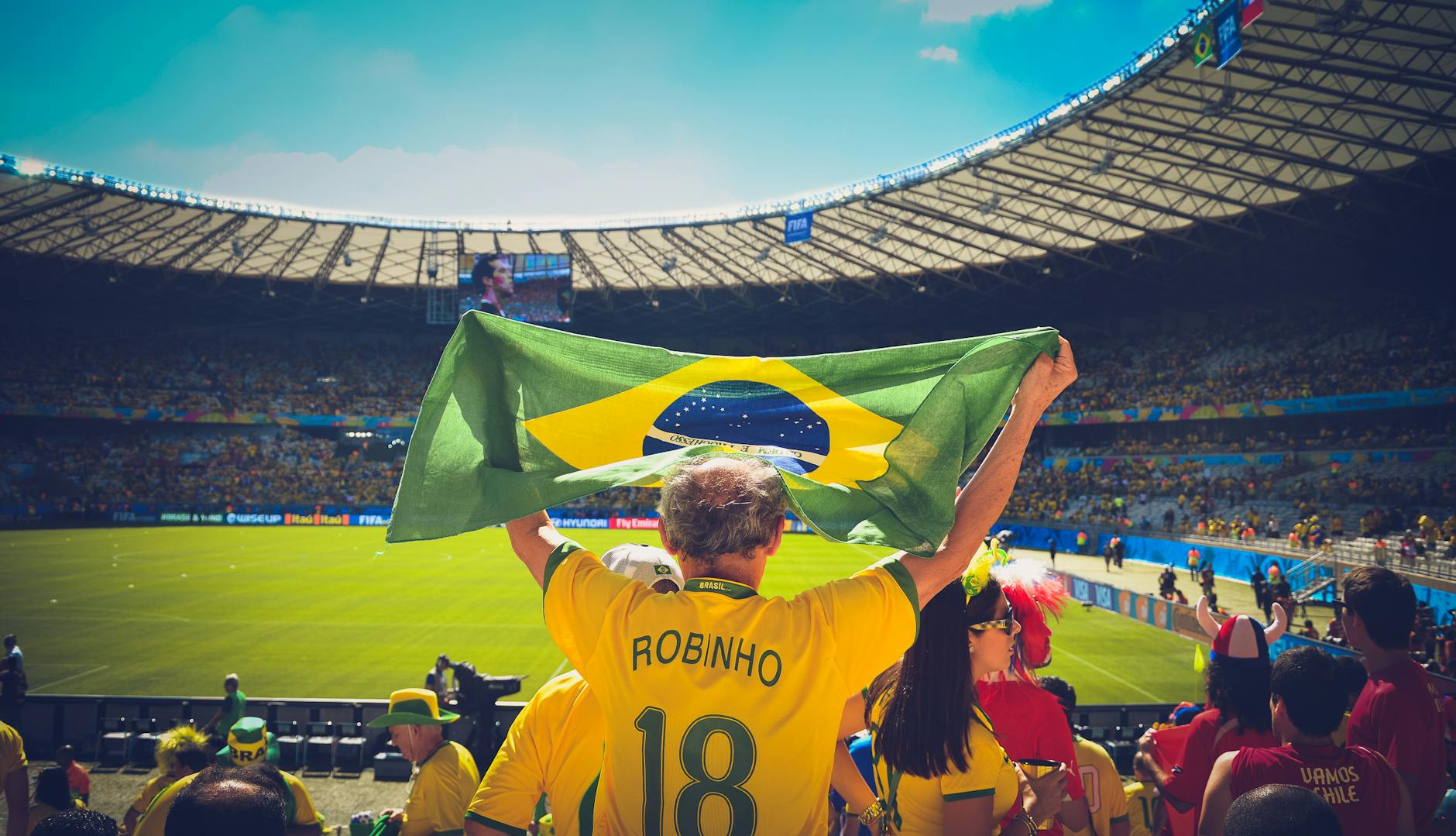
Photo by Caio on Pexels
What changed for players in the expanded 48-team format?
Players now face a 39-day tournament with at least three group-stage matches spread over potentially 10 to 14 days, followed by knockout rounds for advancing sides. Total match load for a finalist: up to eight games, one more than the 2022 maximum of seven. FIFA has built mandatory rest periods of at least 72 hours between matches into the fixture calendar, but the travel demands remain unprecedented. A team playing in Monterrey (Mexico) and Vancouver (Canada) in the same group would cover approximately 4,000 kilometers between those two matches alone.
Squad rotation becomes non-negotiable. The Wikipedia entry on the 2026 FIFA World Cup notes that FIFA has approved expanded 26-man squad lists for this tournament, up from 23 in Qatar. Coaches will need depth at every position. Injury risk increases. A team that loses a key midfielder to a hamstring strain in Matchday 1 has limited recovery time before Matchday 3, especially with cross-continental flights factored in.
What does the new schedule mean for teams now?
Group-stage logistics have become a tactical problem in their own right. Teams drawn into groups with venues in both Mexico and Canada face the most punishing travel profiles. Coaches must weigh rest against match sharpness. Stadium conditions also vary — AT&T Stadium in Arlington, Texas is a climate-controlled dome, while Miami's Hard Rock Stadium in Miami Gardens exposes players to July heat and humidity exceeding 32°C. FIFA's schedule avoids the most extreme midday kickoffs for player safety, but afternoon matches in Houston, Kansas City, and Atlanta will still test fitness.
Broadcasters and neutral fans benefit most from the expanded format. The 104-match calendar stretches across 39 days, providing near-continuous coverage from June 11 to July 19, 2026. For fans tracking [Internal Link: 2026 World Cup predictions and match previews], the volume of fixtures creates more betting opportunities, more tactical storylines, and more opportunities for upsets from lower-ranked nations who now have a path into the knockout rounds.
What nobody tells you about the 2026 match schedule quirks?
Three schedule details rarely surface in mainstream coverage. First, the third-place qualifying path creates asymmetric incentive structures — teams in groups with weaker opponents can finish third with four or five points and still advance, while teams in "Groups of Death" with three strong sides may finish third with four points and go home. Second, the Round of 32 introduces a new round that demands a separate tactical preparation block — managers have never planned for a 32-team knockout stage in a World Cup before. Third, the venue spread means kickoff times will stretch from noon Eastern to midnight Eastern, forcing fans in Europe and Asia to navigate unusual viewing windows.
The ESPN schedule data confirms 104 matches across 16 venues, with group-stage kickoffs clustered between 12:00 PM, 3:00 PM, 6:00 PM, and 9:00 PM local time depending on the host city. These windows vary by timezone — a 9:00 PM kickoff in Mexico City is 10:00 PM in Atlanta and 11:00 PM in Toronto, creating fragmented prime-time coverage across North America.
Three predictions for the 2026 group stage and beyond
Third-place chaos will define the group stage. With eight of 12 third-placed teams advancing, expect at least two "Group of Death" casualties among the top 24 seeds. A 2026 World Cup dark horse from Africa or Asia — think Senegal, Japan, or South Korea — will advance from third place and pull a knockout-round upset.
Travel fatigue will knock out a European favorite before the quarterfinals. A European team drawn into a group with both a Mexican and a Canadian venue faces the worst travel profile. Expect at least one of France, England, Germany, or Spain to underperform relative to pre-tournament betting odds, specifically because of accumulated flight time and recovery deficits.
Finalists will be tested across more venues than ever before. The eventual champion on July 19, 2026 at MetLife Stadium will have played matches in at minimum three different host cities across two countries. Previous World Cup winners rarely crossed more than two or three venues total. The 2026 champion's path demands adaptability no previous title winner has faced.
[Internal Link: 2026 World Cup group stage draw analysis]
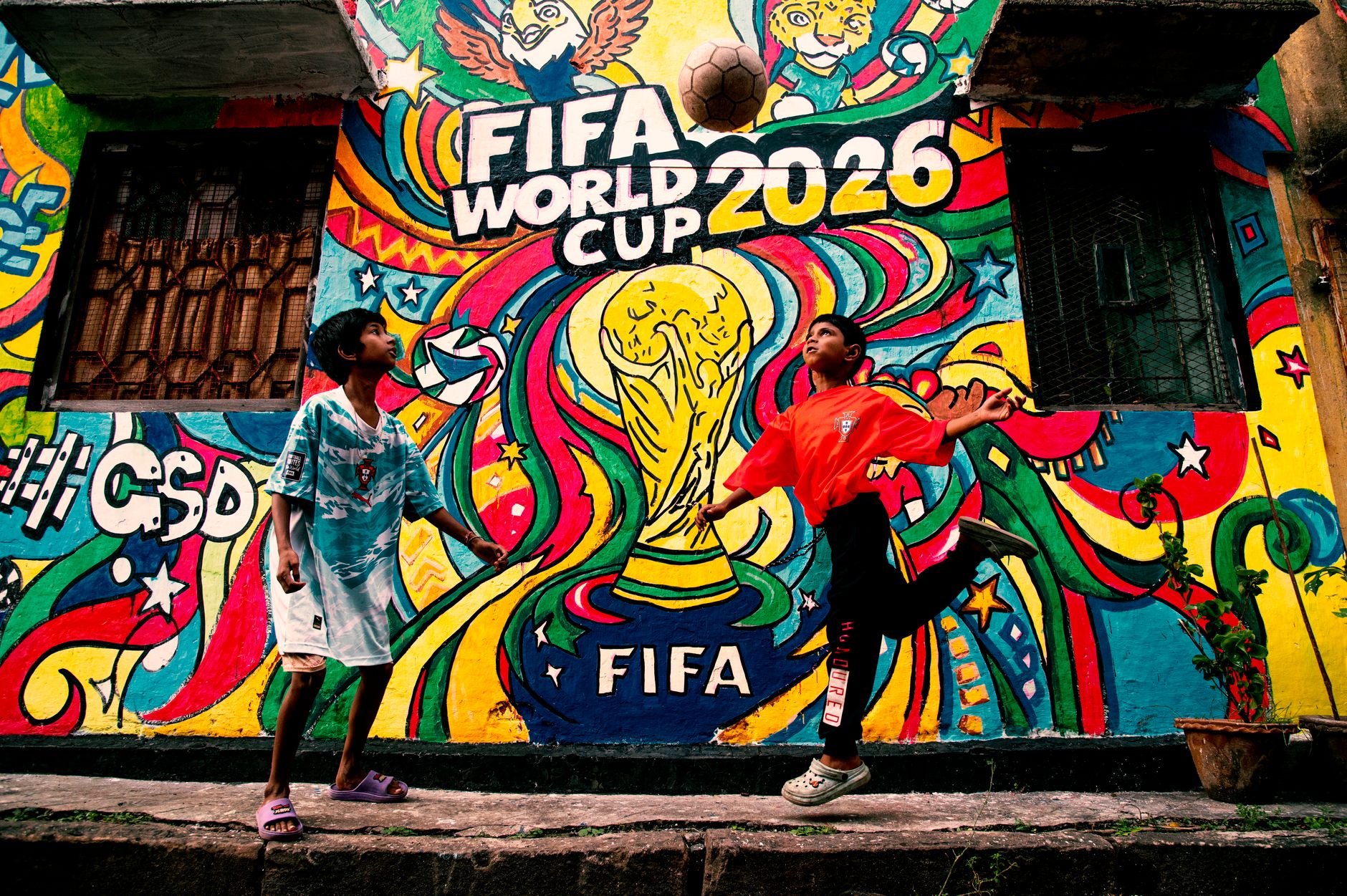
Photo by Anirban Das on Pexels
The 2026 FIFA World Cup is not simply a bigger version of the 2022 tournament. It is a structurally new competition that demands different preparation, different squad management, and different tactical thinking. Teams that treat the expanded format as business-as-usual will learn the hard way that 104 matches across a continent create unique pressure points. Stadium View will track every fixture, every group draw consequence, and every travel-logistics wrinkle as the tournament approaches. Stay informed on the tactical shifts, the upset potential, and the schedule quirks that will decide who lifts the trophy in East Rutherford on July 19, 2026.
Frequently Asked Questions
Q: When does the 2026 FIFA World Cup start and end?
A: The tournament runs from June 11 to July 19, 2026. The opening match takes place in Mexico City at Estadio Azteca, and the final is held at MetLife Stadium in East Rutherford, New Jersey on July 19, 2026. Group-stage matches conclude in late June, with knockout rounds continuing through July.
Q: How many teams and matches are in the 2026 World Cup?
A: The 2026 World Cup features 48 teams playing 104 matches across 16 host cities. This is up from 32 teams and 64 matches in Qatar 2022. The expansion introduces 12 groups of four teams each and a new Round of 32 in the knockout stage.
Q: What is the new third-place qualification rule for 2026?
A: Eight of the 12 third-placed teams advance to the knockout stage alongside the 24 teams that finish first or second in their groups. This creates a 32-team Round of 32, replacing the traditional Round of 16 that previous World Cups used after the group stage.
Q: Which cities are hosting 2026 World Cup matches?
A: The 16 host cities include 11 in the United States (Atlanta, Boston, Dallas, Houston, Inglewood, Kansas City, Miami Gardens, New York/New Jersey, Philadelphia, San Francisco Bay Area, and Seattle), 3 in Mexico (Guadalajara, Mexico City, and Monterrey), and 2 in Canada (Toronto and Vancouver). Stadium View tracks every venue profile and travel-distance calculation.
Q: How does the expanded squad size affect teams in 2026?
A: FIFA has approved 26-player squads for the 2026 World Cup, up from 23 players in previous tournaments. The expanded roster gives coaches more rotation options during the longer 39-day tournament and helps manage injury risk across the 104-match calendar.
Q: What are the biggest schedule challenges for teams in 2026?
A: Cross-continental travel between venues is the primary challenge. Teams playing in both Mexico and Canada during the group stage face journeys exceeding 4,000 kilometers. Staggered kickoff times across four time zones also force coaches to plan around disrupted circadian rhythms, especially for European and South American clubs flying in for individual fixtures.
Q: Where can fans find reliable 2026 World Cup predictions and analysis?
A: Stadium View provides daily match predictions, team tactical breakdowns, player stats, and tournament coverage for the 2026 FIFA World Cup. The site focuses specifically on the expanded format, including group-stage draw consequences, third-place qualification scenarios, and knockout bracket forecasting.