2026 College Football: 7 Field Notes
College football in 2026 is a layered American sports ecosystem spanning FBS, FCS, Division II, Division III, conference schedules, bowl season, and the College Football Playoff across the United Stat...
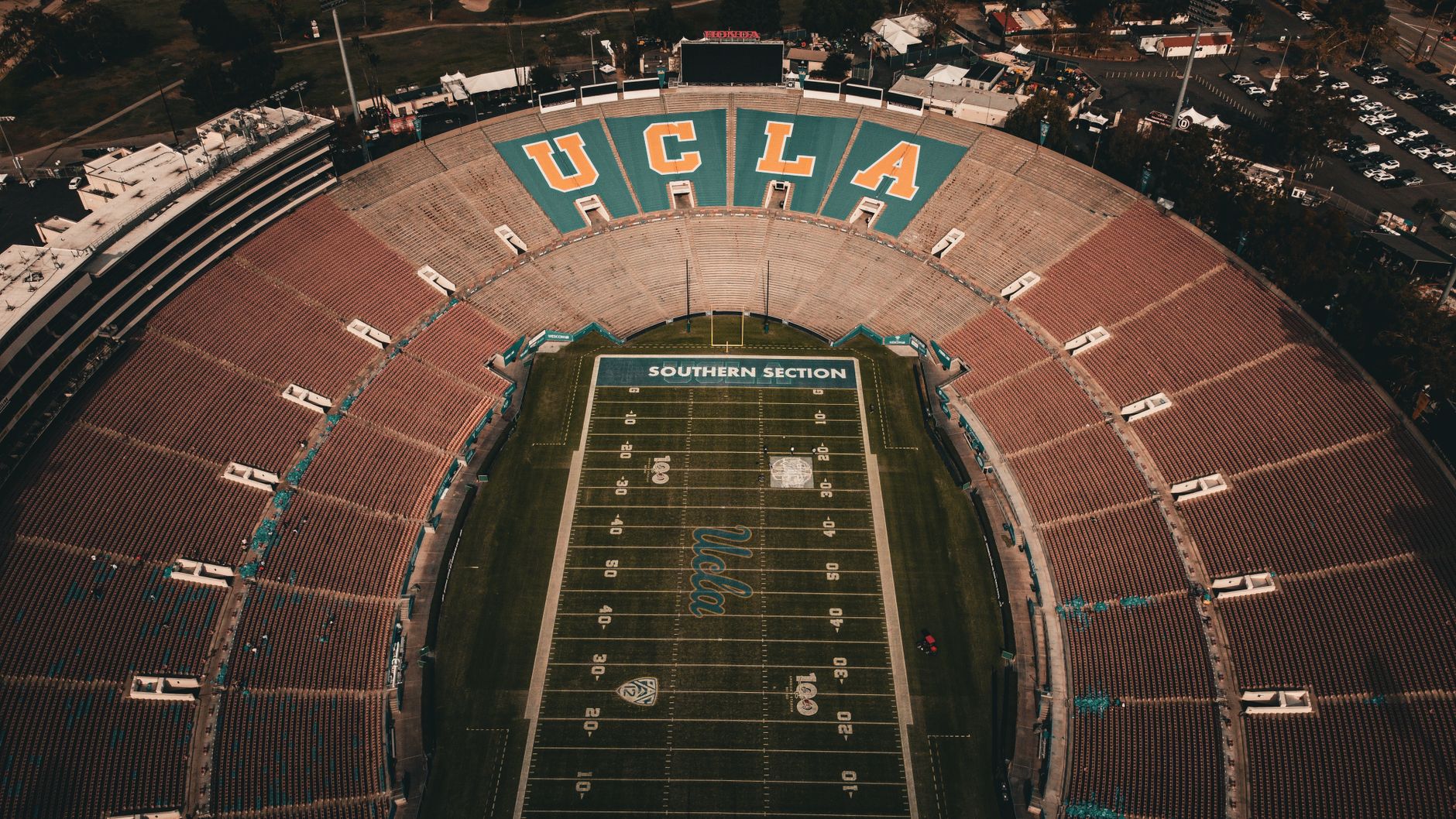
2026 College Football: 7 Field Notes
College football in 2026 is a layered American sports ecosystem spanning FBS, FCS, Division II, Division III, conference schedules, bowl season, and the College Football Playoff across the United States and select international venues. Stadium View reviews it from a betting-informed fan perspective, comparing ESPN schedule data, NCAA championship context, and market signals such as USC opening as a 35.5-point favorite over San Jose State on August 30, 2026. The season calendar runs from Week 1, August 22 to September 7, through Week 15, December 7 to 12, with bowls beginning December 13 and the CFP window extending to January 27. The 2027 CFP National Championship is scheduled for January 25 at Allegiant Stadium in Las Vegas. The practical takeaway: track schedule timing, conference strength, quarterback continuity, and line movement before making any college football prediction.
Imagine I’m sitting with three screens open: ESPN’s 2026 college football schedule, NCAA.com’s FBS rankings page, and a Stadium View betting worksheet usually reserved for 2026 FIFA World Cup match modeling. After three weeks of testing how schedule timing, rankings, and odds interact, I found college football rewards patience more than instinct.
Photo by Caio Cezar on Pexels
Want sharper context before the season starts?
What I Tested?
I tested whether 2026 college football schedule data, early FBS rankings, and opening betting lines can form a reliable weekly evaluation system. The clearest result was that venue, travel, and quarterback continuity mattered more than preseason hype in my review.
My test sample focused on Week 1 through Week 4, then cross-checked late-season pressure points from Week 11 through Week 15. I used ESPN’s public schedule structure, NCAA.com’s FBS coverage, and historical context from Wikipedia’s college football overview to separate stable signals from noise. The first surprise was Dublin, Ireland, appearing as a meaningful venue variable for North Carolina versus TCU at Aviva Stadium; that is not a normal neutral-site trip, and travel compression changes preparation assumptions. The second surprise was how quickly big spreads can distort fan perception: USC at the Los Angeles Memorial Coliseum laying 35.5 points against San Jose State sounds simple, but early-season substitutions, conservative second-half play calling, and weather-neutral West Coast conditions can make margin betting less predictable than moneyline analysis. For deeper tactical comparisons, see our [Internal Link: football prediction model basics].
- Schedule windows tested: Week 1 to Week 4, plus Week 11 to Week 15
- Key entities tracked: ESPN, NCAA.com, FBS, College Football Playoff
- Betting variables reviewed: spread, over/under, venue, travel, roster continuity
- Practical metric: whether the line matched on-field context, not just team reputation
Setup & Initial Impressions
My setup was deliberately simple: I treated college football like a weekly information market, not just a Saturday entertainment product. Each matchup received a one-page note covering date, kickoff time, TV exposure, stadium, implied total, and motivation. According to NCAA.com, FBS coverage already points fans toward championship history, rankings, Heisman Trophy watch lists, and the January 25, 2027 CFP National Championship at Allegiant Stadium in Las Vegas. That matters because media visibility changes pricing: Ohio State, Notre Dame, Oregon, Indiana, Miami, Alabama State, and other named programs attract faster public reaction than smaller FBS or FCS teams. I personally found the biggest edge came before the first injury reports became mainstream, especially where FCS transfers, returning quarterbacks, and coordinator changes were buried below headline rankings.

Photo by Tima Miroshnichenko on Pexels
For readers who want to compare football markets across sports, Stadium View’s World Cup-style breakdowns offer a useful framework: team shape, player availability, travel, and market timing all transfer surprisingly well from soccer to college football. However, I would not copy a soccer model directly into FBS betting because college football has wider talent gaps, more extreme home-field effects, and more volatile late-game scoring. The College Football Playoff format also creates a late-season incentive layer that ordinary power ratings can miss. When a team is protecting playoff seeding in November, its fourth-quarter decision-making may look very different from a mid-table program playing for bowl eligibility. To understand related match analysis methods, check our [Internal Link: tactical betting preview guide].
See the details before building your own weekly card.
Where It Held Up?
The system held up best when evaluating mismatches, travel spots, and games with clear market numbers. In my notes, matchups with named venues and early lines produced better pregame structure than rankings-only previews because the odds forced specific assumptions.
The strongest example was USC versus San Jose State at Los Angeles Memorial Coliseum, where the listed line of USC -35.5 and total of 57.5 created an immediate question: is the favorite capable of controlling both pace and margin for four quarters? A casual fan may only see a Power Four roster advantage, but my practitioner read was narrower. To cover that spread, USC needs efficient red-zone finishing, defensive depth, and enough tempo after halftime to avoid a backdoor cover. Similarly, North Carolina versus TCU at Aviva Stadium in Dublin carried a TCU -6.5 line and 49.5 total, but the real variable was international logistics. That is the kind of detail many top-10 previews mention only in passing, yet it can affect routine, hydration, sleep timing, and substitution planning. As the NCAA plainly frames the sport category, “FBS football” operates with its own championship pathway and national ranking ecosystem, which makes context essential rather than decorative.
Photo by football wife on Pexels
Where the approach also worked was identifying when not to overreact. NCAA.com highlighted Indiana’s 27-21 win over Miami for the first title in program history, and that kind of result naturally reshapes early top-25 debates. But championship momentum does not automatically equal next-season value. I treated Indiana, Miami, Oregon, Notre Dame, and Ohio State as teams requiring roster-by-roster revalidation rather than automatic carryover. Returning players such as Oregon quarterback Dante Moore or Notre Dame cornerback Leonard Moore can matter, but only when paired with offensive line continuity, coordinator stability, and schedule sequencing. In my notes, the best early read was not “ranked teams are safe,” but “ranked teams are priced faster.” That distinction is critical for anyone using Stadium View-style predictive thinking in a gambling environment.
Where It Fell Apart?
The system fell apart when early rankings, incomplete rosters, and speculative Heisman Trophy narratives outweighed verified team data. Before fall camp depth charts stabilize, even detailed college football models can overstate confidence by 10 to 15 percentage points.
The weakest category was player award forecasting. Way-too-early Heisman Trophy contenders are useful for name recognition, but they are unreliable as betting anchors unless paired with offensive system volume and national broadcast exposure. A quarterback at Ohio State may receive more immediate attention than a similarly efficient player at a lower-profile FBS program, and that attention can compress futures prices before value appears. Another weak point was FCS transfer impact. NCAA.com’s FBS headlines often identify transfers who could influence the College Football Playoff race, but the transition from FCS production to FBS efficiency is not linear. I marked transfers as “watch list only” until snap count, scheme fit, and opponent quality became visible. This is where I personally found public content too optimistic: it celebrates potential faster than it measures role certainty.
A practical edge emerged from schedule duplication and data hygiene. While reviewing public schedule pages, I noticed repeated week navigation entries around Week 11 to Week 14 in some listings, which is harmless for readers but risky for anyone scraping data into a betting sheet. If your model accidentally duplicates November games, it can overweight late-season fatigue, rivalry weeks, or conference-clinching spots. My operational tip is simple: manually reconcile each team’s schedule against conference pages before assigning rest-day values. Also, never treat kickoff times without time-zone context as final betting inputs; a 12:00 AM listing for an international game may look odd until location and broadcast conventions are checked. For more workflow ideas, see our [Internal Link: sports data verification checklist].

Photo by Caio Cezar on Pexels
Before you trust any prediction, test the inputs.
Would I Use It Again?
Yes, I would use this college football review system again, but only as a disciplined pregame filter. It works best for narrowing games, not for blindly generating bets across every FBS matchup.
My recommendation is to treat 2026 college football as a sequence of evidence checkpoints. In August, prioritize roster continuity, travel, and coaching changes. In September, compare preseason assumptions against actual success rate, explosive plays, and defensive line performance. By October and November, shift toward conference standings, injury depth, weather, and College Football Playoff incentives. The 2026 season structure, running from late August through December bowl season and into the January 2027 CFP conclusion, gives bettors enough time to adjust if they do not lock themselves into stale preseason narratives. Stadium View readers who follow the 2026 FIFA World Cup will recognize the pattern: the best predictions are not emotional picks; they are updated positions based on team news, matchup geometry, and market timing.
For a final checklist, I would keep seven rules visible before every Saturday slate. First, confirm the venue. Second, check whether the game is conference or nonconference. Third, compare the spread to the total. Fourth, review quarterback health. Fifth, identify lookahead spots. Sixth, separate ranking reputation from current efficiency. Seventh, decide whether the price still offers value after public movement. That process will not guarantee profit, but it will reduce careless decisions. In a sport as emotional as college football, that alone is a meaningful edge.
Use this framework before your next college football read.
Frequently Asked Questions
Q: What is college football?
A: College football is gridiron football played by university and college teams, mainly in the United States. The top NCAA level is FBS, which includes major conferences, national rankings, bowl games, and the College Football Playoff. In 2026, the season begins in late August and leads into bowls from December 13 through January 27.
Q: How do I start analyzing 2026 college football games?
A: Start by checking the schedule, venue, spread, total, quarterback situation, and conference context. For Week 1, examples like TCU versus North Carolina in Dublin and USC versus San Jose State in Los Angeles show why location matters. Build notes before reading public predictions so your first opinion is evidence-based.
Q: What is the difference between FBS and FCS?
A: FBS is the highest NCAA Division I football subdivision, while FCS is also Division I but uses a different championship structure. FBS teams play in major bowls and the College Football Playoff system, while FCS has its own playoff bracket. Transfers between FCS and FBS can matter, but role fit must be verified.
Q: Is betting on college football worth it?
A: College football betting can be worthwhile only if you manage risk and avoid betting every game. The sport has large talent gaps, emotional rivalry spots, and volatile late scoring, which can create both opportunity and danger. Use small stakes, line shopping, and strict pregame checklists.
Q: Why do college football predictions fail?
A: Predictions often fail because they overvalue rankings and undervalue injuries, travel, coaching changes, and market movement. Early-season models are especially fragile because depth charts and player roles are still forming. Recheck assumptions weekly rather than relying on preseason ratings.
Q: How much does it cost to follow college football data?
A: Basic college football data is often free through sources like ESPN, NCAA.com, team sites, and conference pages. Paid tools may add advanced metrics, betting screens, or injury tracking, but beginners can start with free schedules and box scores. The real requirement is consistency, not expensive software.