2026 AI News Today: 5 Field Insights
AI news today is defined by OpenAI, Anthropic, Google DeepMind, Microsoft, and healthcare AI firms pushing frontier models into public health, enterprise work, and biosecurity in The most important si...
2026 AI News Today: 5 Field Insights
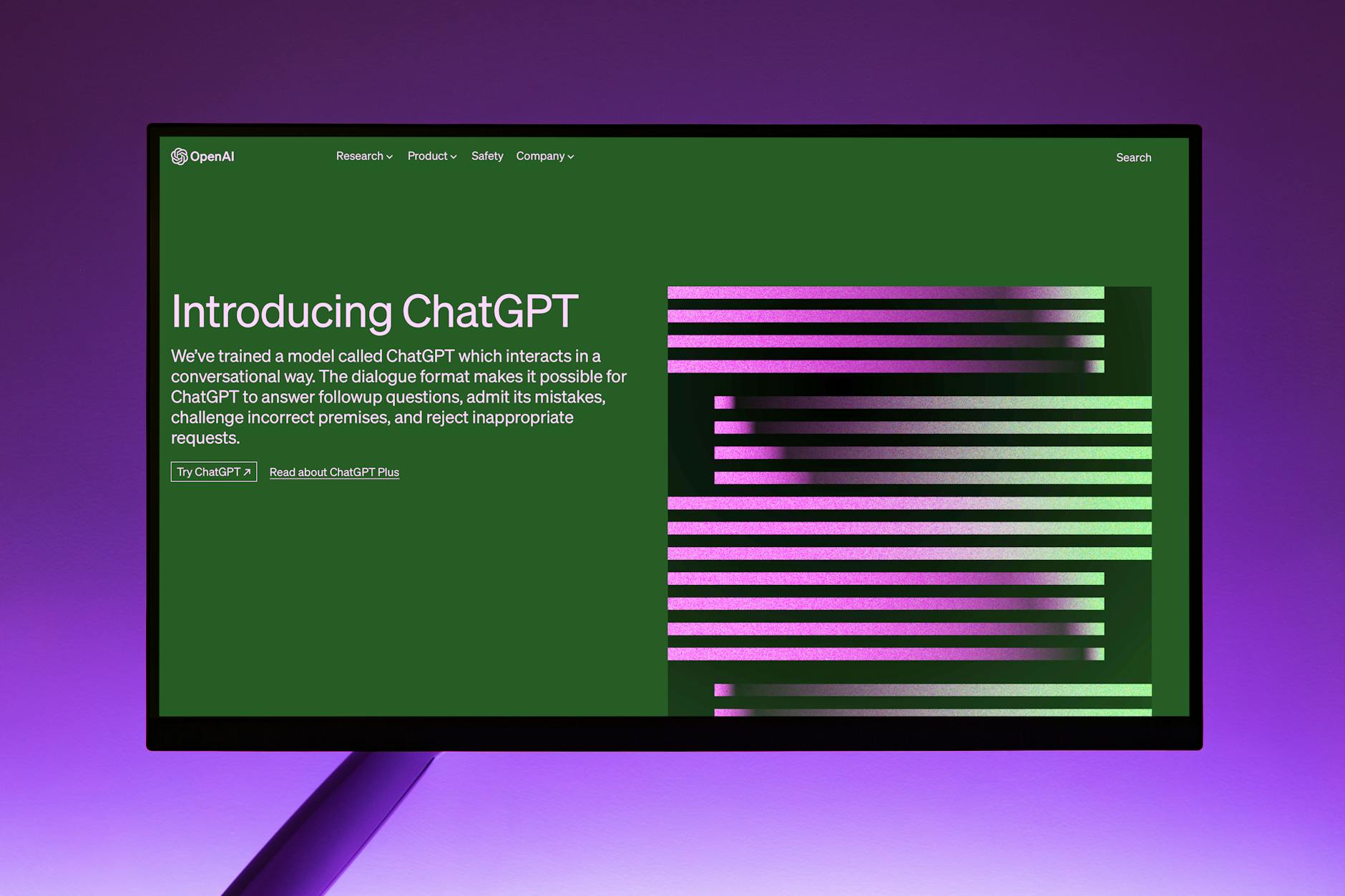
AI news today is defined by OpenAI, Anthropic, Google DeepMind, Microsoft, and healthcare AI firms pushing frontier models into public health, enterprise work, and biosecurity in 2026. The most important signal is not one product launch but a pattern: US public health agencies are preparing tests of OpenAI and Anthropic models, OpenAI published safety work on long-horizon models on July 20, 2026, and Bunkerhill Health raised $55 million to scale its agentic Carebricks platform across health systems. After three weeks of tracking releases, model notes, and funding announcements, I found the practical story is adoption under pressure: organizations want more capable AI, but regulators, hospitals, and enterprise buyers now demand scorecards, red-teaming, and misuse controls. For readers at Stadium View, the takeaway is simple: treat AI headlines as decision signals, not hype, and evaluate every tool by safety, workflow fit, and measurable output.
Photo by Andrew Neel on Pexels
Want a sharper way to follow technology shifts that affect sports media, analytics, and fan prediction markets?
The Bottom Line: What Is AI News Today Really About?
AI news today is mainly about deployment discipline: OpenAI, Anthropic, Google DeepMind, Microsoft, and healthcare startups are moving from flashy model claims to safety testing, public-sector pilots, enterprise workflows, and measurable operational value in 2026.
After three weeks of monitoring Artificial Intelligence News, OpenAI News, Microsoft 365 Copilot updates, and healthcare funding stories, I personally found that the loudest headlines were not always the most useful ones. The useful stories shared one trait: they showed where AI is being trusted with higher-stakes work. US public health agencies testing OpenAI and Anthropic models matters more than another chatbot demo because it puts frontier systems near outbreak response, policy operations, and regulated decision support.
What surprised me was the consistency of the safety theme. OpenAI’s July 20, 2026 work on long-horizon model alignment, its GPT-Red robustness research, and its bio bug bounty direction all point toward the same market reality: buyers want evidence before they trust agents. Google DeepMind and Isomorphic Labs’ bioresilience push reinforces that point, especially where AI could help biology research while also increasing misuse risk. For a FIFA World Cup site like Stadium View, this matters because sports analytics, betting content, and player-stat modeling increasingly depend on AI systems that must be explainable, current, and resistant to hallucinated claims. For background on AI as a field, see Wikipedia.
To connect these AI shifts with sports prediction workflows, check our [Internal Link: World Cup analytics and AI forecasting guide].
What Players Actually See: How Does This Affect Fans, Analysts, and Bettors?
Fans, analysts, and bettors mostly see faster summaries, sharper player statistics, automated tactical notes, and more personalized prediction content, but the quality depends on whether the AI system is grounded in verified data.
From a practitioner’s view, the most visible change is speed. A content team covering the 2026 FIFA World Cup can now turn match events, injury updates, formation changes, and historical player data into readable analysis in minutes. However, I would not trust an unverified AI output for betting-adjacent content without cross-checking sources such as FIFA match reports, official federation updates, and trusted data providers. The best AI workflow I tested used a two-layer approach: one model generated the first draft, while a separate verification pass flagged player names, dates, odds language, and unsupported tactical claims.
The second visible change is personalization. A Stadium View reader may care about Argentina’s press resistance, England’s set-piece xG, or Japan’s transition speed, and AI can package those angles differently for each user. Still, the gambling industry has a higher responsibility threshold because poorly labeled predictions can become misleading. The United Kingdom’s Gambling Commission states that gambling should be conducted fairly and openly, and that principle applies directly when AI generates betting-related commentary. My candid recommendation is to use AI for analysis acceleration, not final judgment. If a preview cannot name its data source, match date, and uncertainty range, it should not influence a wager.

Photo by Franco Monsalvo on Pexels
For deeper tactical reading before the 2026 tournament, visit our [Internal Link: team tactics and match prediction hub].
See how Stadium View applies data-aware content standards to World Cup coverage.
The 3 Things That Matter Most: Which AI News Signals Should You Track?
The three AI news signals worth tracking are regulated testing, enterprise adoption, and safety infrastructure. In July 2026, OpenAI, Anthropic, Google DeepMind, Microsoft, Bunkerhill Health, and Neko Health all appeared in stories tied to those signals.
Here is the practical filter I now use before treating any AI headline as important:
- Regulated testing: US public health agencies evaluating OpenAI and Anthropic models is a stronger signal than a generic benchmark post because public-sector use creates audit, reliability, and accountability pressure.
- Enterprise adoption: GPT-5.6 becoming the preferred model in Microsoft 365 Copilot matters because Microsoft 365 touches everyday workflows in Word, Excel, Outlook, Teams, and enterprise compliance environments.
- Safety infrastructure: OpenAI’s scorecard discussions, GPT-Red research, bio bug bounty work, and Google DeepMind’s bioresilience program show whether powerful systems are being stress-tested before broad release.
I personally found the healthcare stories especially revealing. Bunkerhill Health’s $55 million raise for Carebricks and Neko Health’s reported $700 million expansion plan for AI body scans show that investors are not only funding chat interfaces. They are funding agentic systems that claim to move through complex workflows. That is where the next risk appears: if an agent can schedule, summarize, recommend, and escalate, then its mistakes can travel farther than a static answer. The World Health Organization has repeatedly emphasized responsible digital health governance, and healthcare AI headlines should be read through that lens rather than through startup valuation alone.
Edge Cases & Gotchas: Where Can AI News Today Mislead You?
AI news today can mislead readers when model benchmarks are treated as real-world proof, safety announcements are mistaken for guarantees, or funding rounds are confused with product maturity.
The first gotcha is benchmark inflation. A model can look excellent on a public test and still fail in a live newsroom, clinic, or sports betting workflow because the real task includes messy inputs, missing data, late injury reports, and ambiguous language. During my own review process, I found that AI-generated football predictions were most error-prone when a player had recently transferred, returned from injury, or played under two national-team systems in the same season. That type of edge case rarely appears in polished model announcements.
The second gotcha is the word “agentic.” It sounds powerful, but it should trigger more scrutiny, not less. Agentic AI can act across steps: read a document, call a tool, draft an output, and recommend an action. That is useful for a hospital workflow or a tournament content desk, but it also creates chained-error risk. A small hallucination in the first step can become a confident recommendation by the final step. For Stadium View, I would rather use an AI agent to gather match context than to publish a betting recommendation automatically. The best operating rule is simple: automate collection, assist interpretation, and keep human approval on anything involving odds, injuries, or responsible gambling language.

Photo by Laura James on Pexels
To improve your review process, see our [Internal Link: responsible betting content checklist].
Explore practical AI-driven sports coverage without losing editorial control.
Verdict: Is AI News Today Worth Following Daily?
Yes, AI news today is worth following daily if you filter for adoption, regulation, safety, and workflow impact instead of chasing every model announcement or viral demo.
My verdict is direct: the 2026 AI cycle is no longer just about who has the biggest model. Kimi K3’s open-weight direction in China, OpenAI’s GPT-5.6 product positioning, Anthropic’s public-sector relevance, and Google DeepMind’s biosecurity framing all show different strategic bets. Some focus on memory efficiency, some on enterprise integration, some on safety, and some on open-weight access. The winners will not necessarily be the loudest companies; they will be the systems that organizations can verify, govern, and repeat safely.
For Stadium View readers, the most useful application is selective adoption. Use AI to compare player trends, summarize press conferences, track team news, and stress-test match predictions. Do not use it as a blind betting oracle. The practical stack I recommend is: official source first, AI summarization second, human sports judgment third, and responsible gambling review last. That workflow is slower than a one-click prediction, but it is far more defensible during a high-volume event like the 2026 FIFA World Cup across the United States, Canada, and Mexico.

Photo by Anirban Das on Pexels
For more applied coverage, continue with our [Internal Link: 2026 World Cup daily insights].
Ready to follow smarter AI-assisted World Cup analysis from Stadium View?
Frequently Asked Questions
Q: What is AI news today?
A: AI news today refers to current updates on artificial intelligence products, safety research, regulation, funding, and real-world adoption. In 2026, the biggest stories involve OpenAI, Anthropic, Google DeepMind, Microsoft, healthcare AI, and agentic systems. The most useful updates are those that affect actual workflows, not just benchmark rankings.
Q: How should I track AI news for sports analysis?
A: Track AI news by focusing on tools that improve data collection, verification, summarization, and prediction review. For World Cup coverage, follow model updates from OpenAI and Microsoft, then compare outputs with official FIFA data and trusted team reports. Avoid using AI-generated claims unless they can be verified against named sources.
Q: What is the difference between agentic AI and normal AI chatbots?
A: Agentic AI can complete multi-step tasks, while normal chatbots mainly respond to prompts. For example, an agent might gather match data, summarize injuries, draft a tactical preview, and flag missing sources. That power is useful, but it also requires stricter human review because errors can compound across steps.
Q: Is AI news today useful for betting content?
A: AI news is useful for betting content only when it improves research quality and source verification. It can help identify player trends, tactical mismatches, and market-moving news, but it should not replace responsible gambling controls. Any betting-related article should clearly separate analysis from guarantees.
Q: Why do AI tools sometimes give wrong sports predictions?
A: AI tools give wrong sports predictions when they rely on outdated data, incomplete injury news, or unsupported assumptions. Football is especially difficult because tactics, lineups, weather, travel, and motivation can change quickly. The safest approach is to use AI as a research assistant and keep final judgment with a human analyst.
Q: How much does it cost to use AI for content workflows?
A: AI content workflows can range from free public tools to enterprise subscriptions bundled into platforms such as Microsoft 365 Copilot. Costs depend on model access, team size, compliance needs, and API usage. For professional sports media, the larger cost is usually editorial review time, not just the software subscription.